If you’ve landed here looking for the usual wedding photography article about the wonderful qualities of film—the dreamy colors, the grain, the retro aesthetic—you might be a little disappointed. While I appreciate those things, this is a more personal story about why I shoot film at weddings going back more than 20 years, long before the idea of photographing weddings was even a gleam in my eye.
My First Camera—and a Rough Start With Film
I was a college student at the University of Oregon, fumbling my way through an Intro to Photojournalism class with my dad’s old beat-up Minolta film camera. One of our assignments was to document an event and create a photo story, and for reasons I still can’t quite explain, I volunteered to photograph the Lane County Heart Walk. It was a decidedly unglamorous beginning to a hobby in photography, but one image captured that day, would hold special significance to me personally to this day.
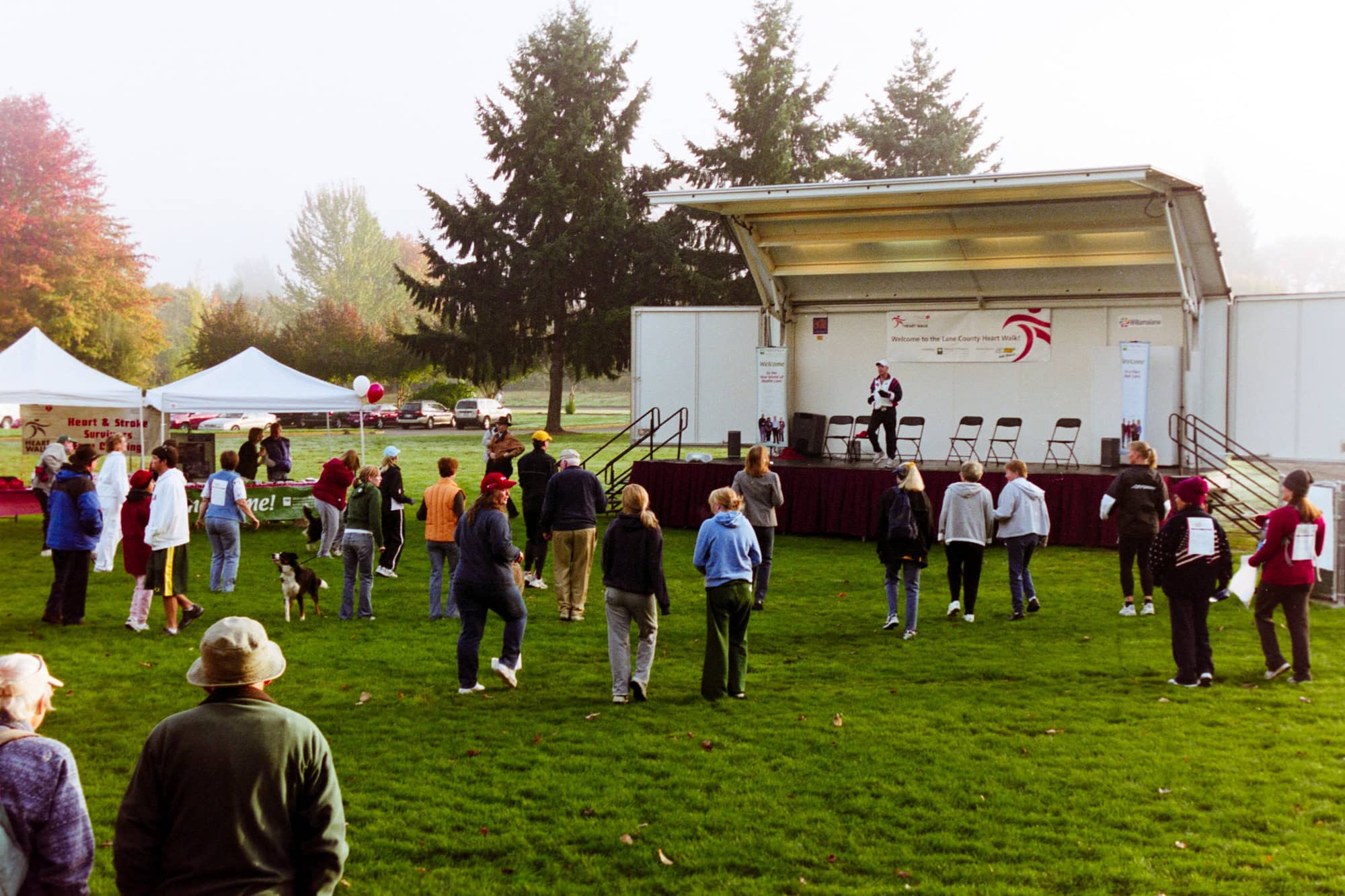
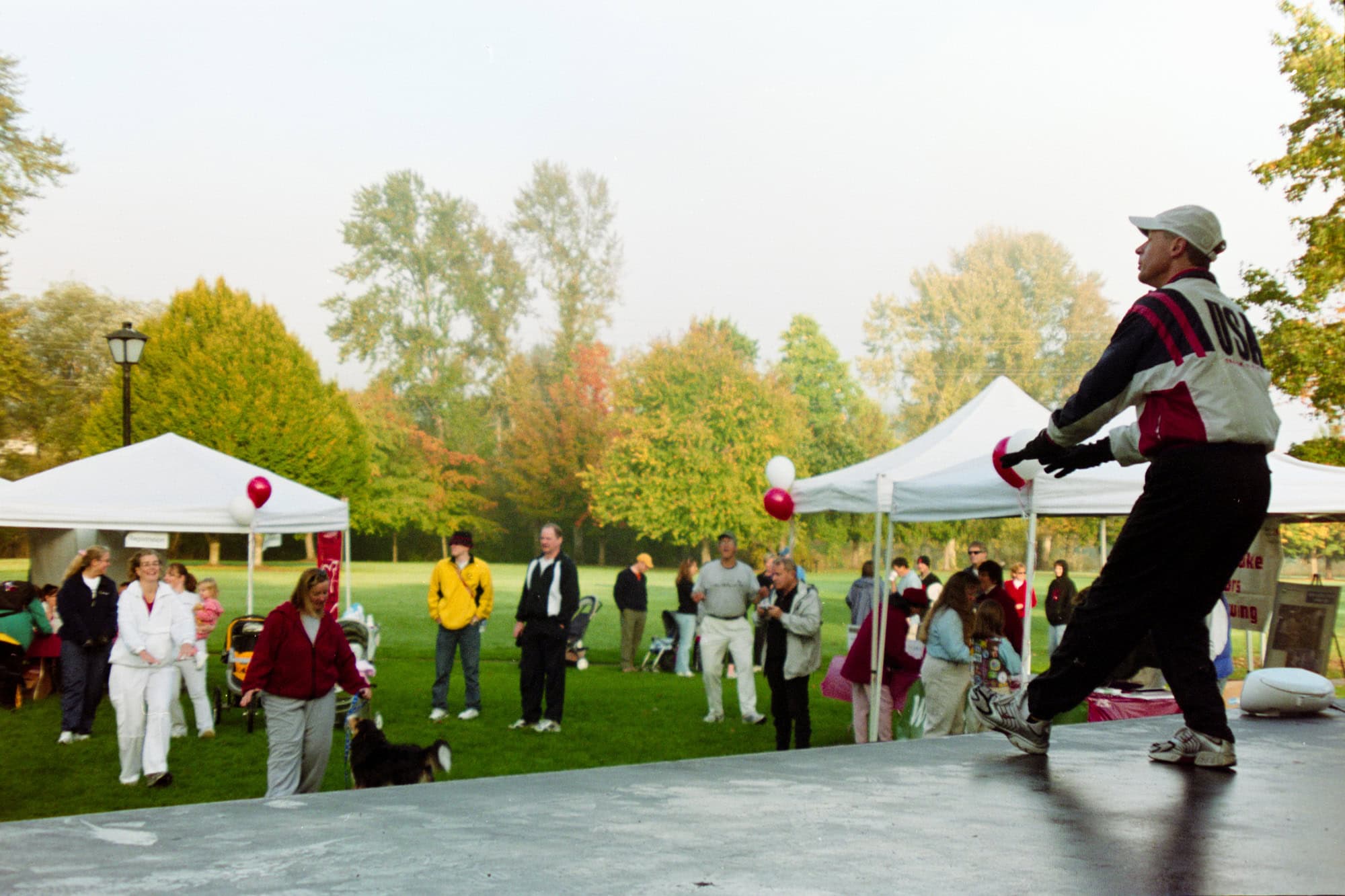
My only experience with photography before that class was disposable film cameras and point-and-shoot digital cameras on family vacations. So it was kind of a big deal that I got to borrow my dad’s Minolta SRT-101 film camera from the 1970s. Truth be told, the Lane County Heart Walk would be one of the last events that old Minolta would ever photograph because it was soon after stolen from my bedroom during a home burglary.
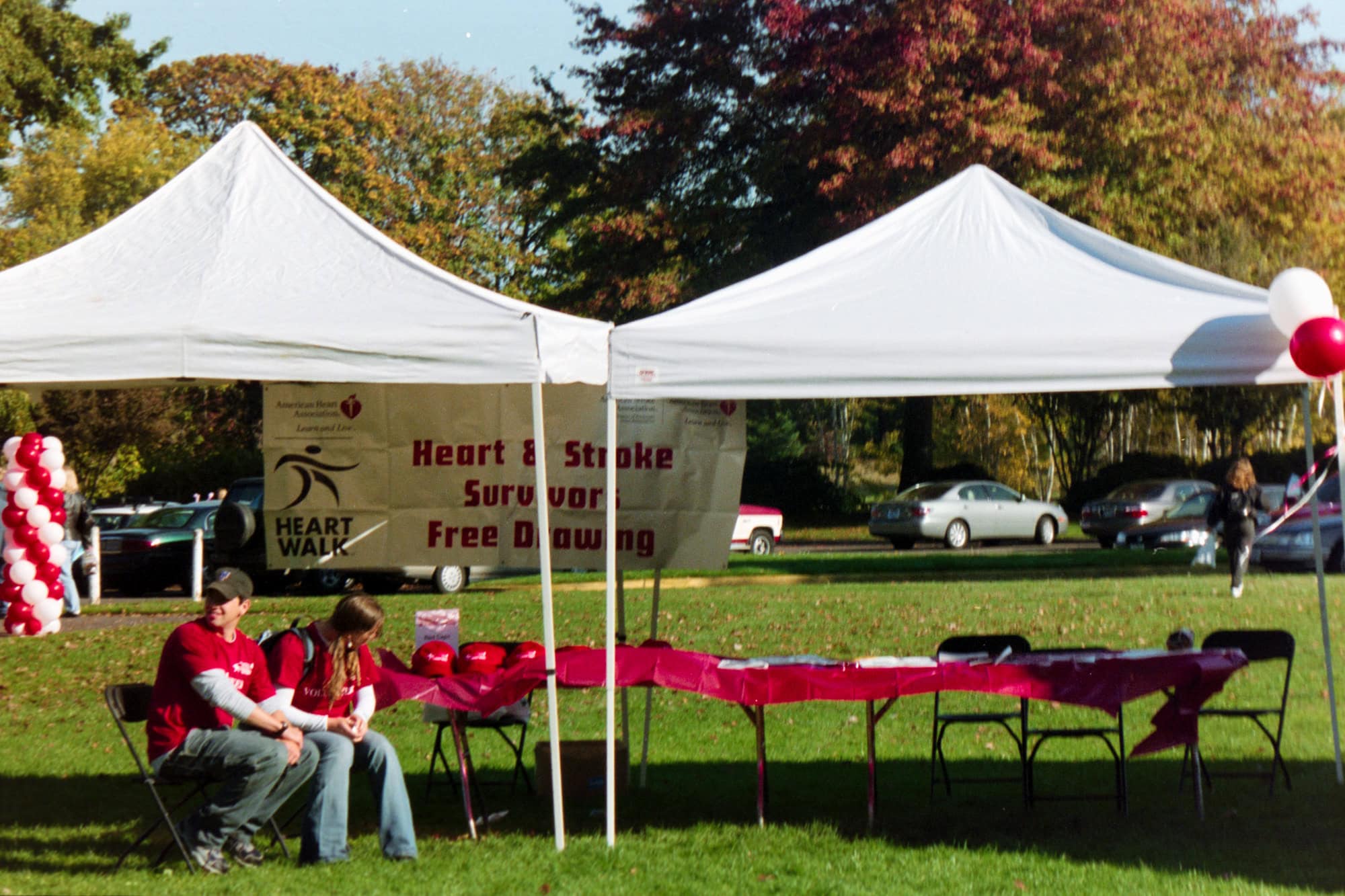
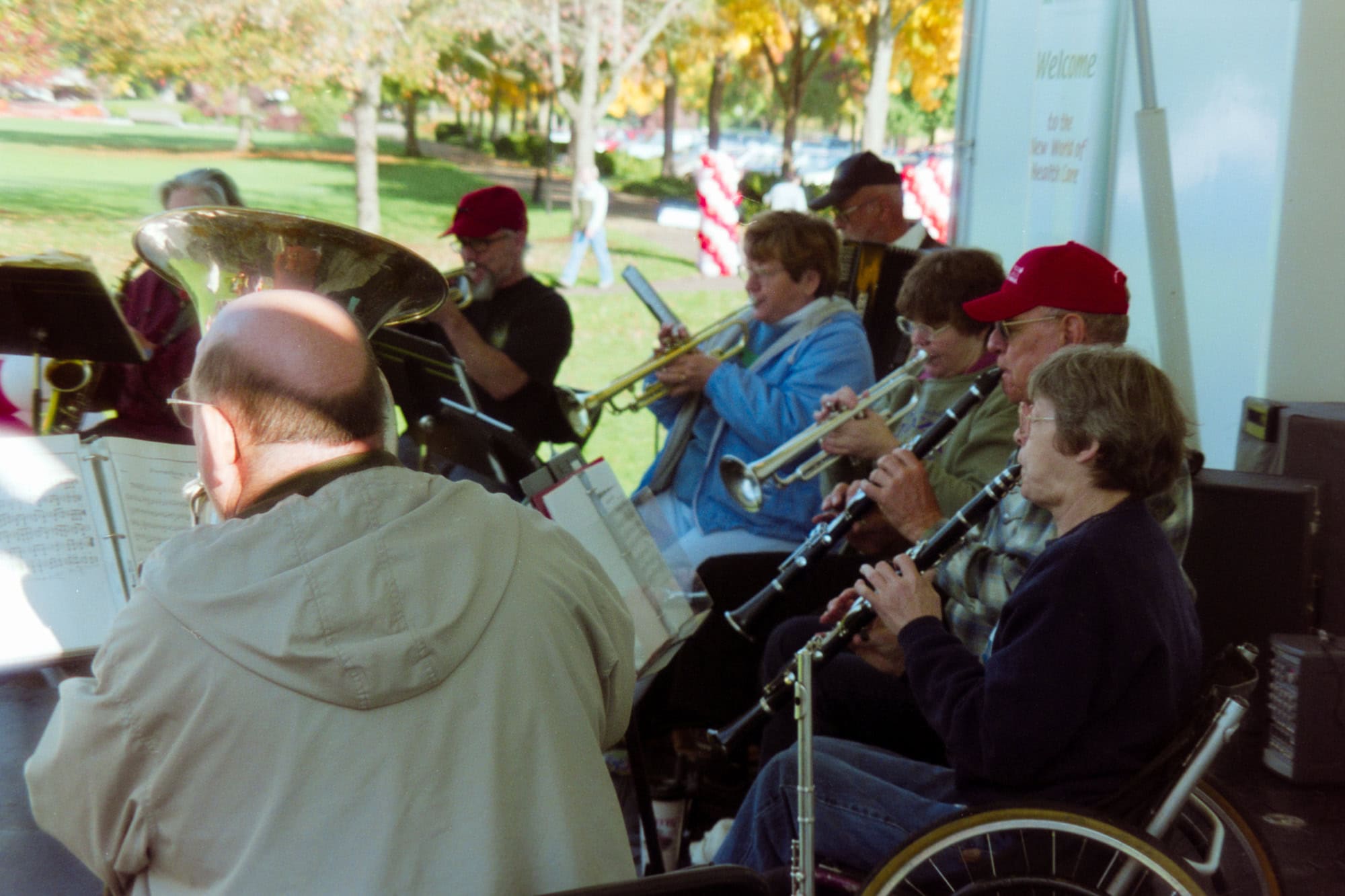
Before that camera was stolen, I spent a year learning to shoot with it while manually adjusting focus and exposure settings. Those old Minoltas had none of the conveniences of modern cameras. And, I’ll be honest, I was terrible at it. Most of my images were completely out of focus, poorly exposed, and/or featuring poorly timed facial expressions (as evidenced by the photos included here). It was a rough start, but it wasn’t the Minolta’s fault, of course. Despite apparently having perfectly fine vision, I just couldn’t manage to manually focus the camera accurately (which is honestly still a problem of mine to this day, but thank you modern autofocus systems).
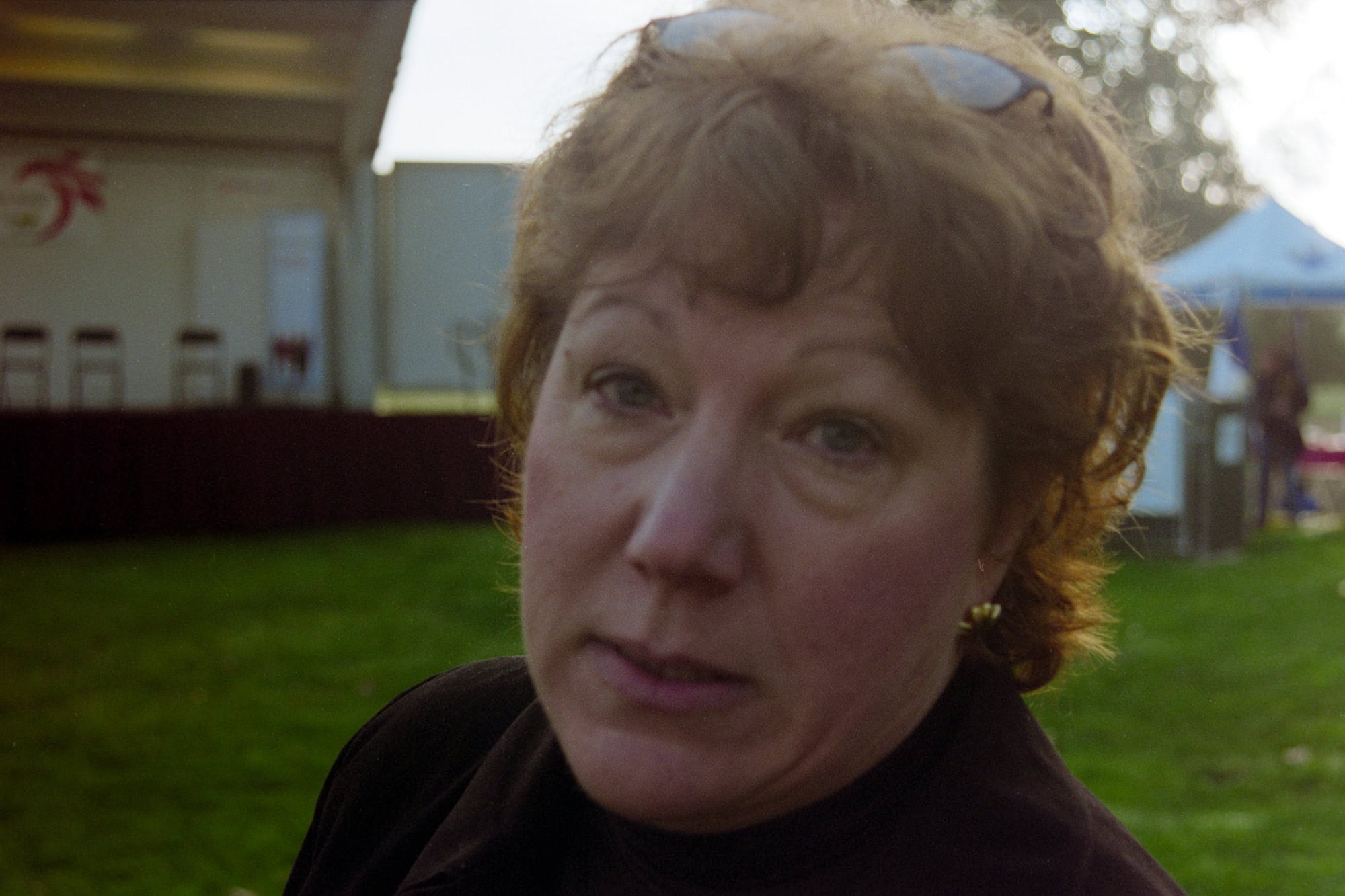
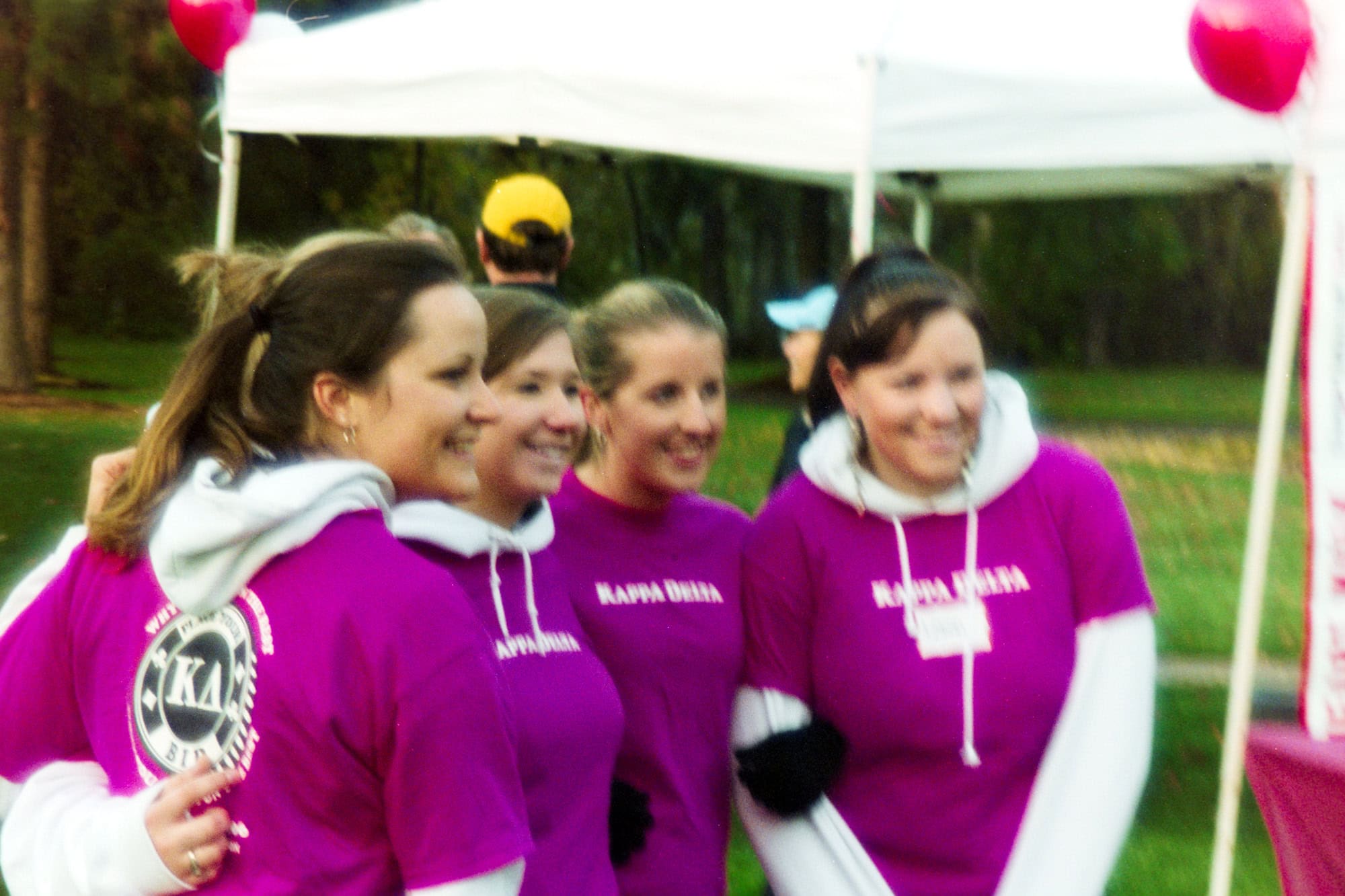
My hard-ass photojournalism professor liked to make an example out of me for how not to use a camera, and while from time-to-time I took a semi-decent image, my inability to focus the camera was so consistent that it became somewhat of a running joke.
The Photograph That Changed How I Saw Photography
However, there was one bright moment during that class that would lay the foundation for my entire photography career.
In the middle of the term, we were instructed to document an event and create a photo story. It could be a sports match, a play, a concert, anything news worthy, or even a wedding. But, lol, no, I did not get into weddings that early. In fact, I scoffed at the idea, thinking photographing weddings was cheesy, and simultaneously in my infinite, youthful laziness I couldn’t quite summon a better idea for myself. Thankfully my instructor offered up a few ideas to the class to claim.
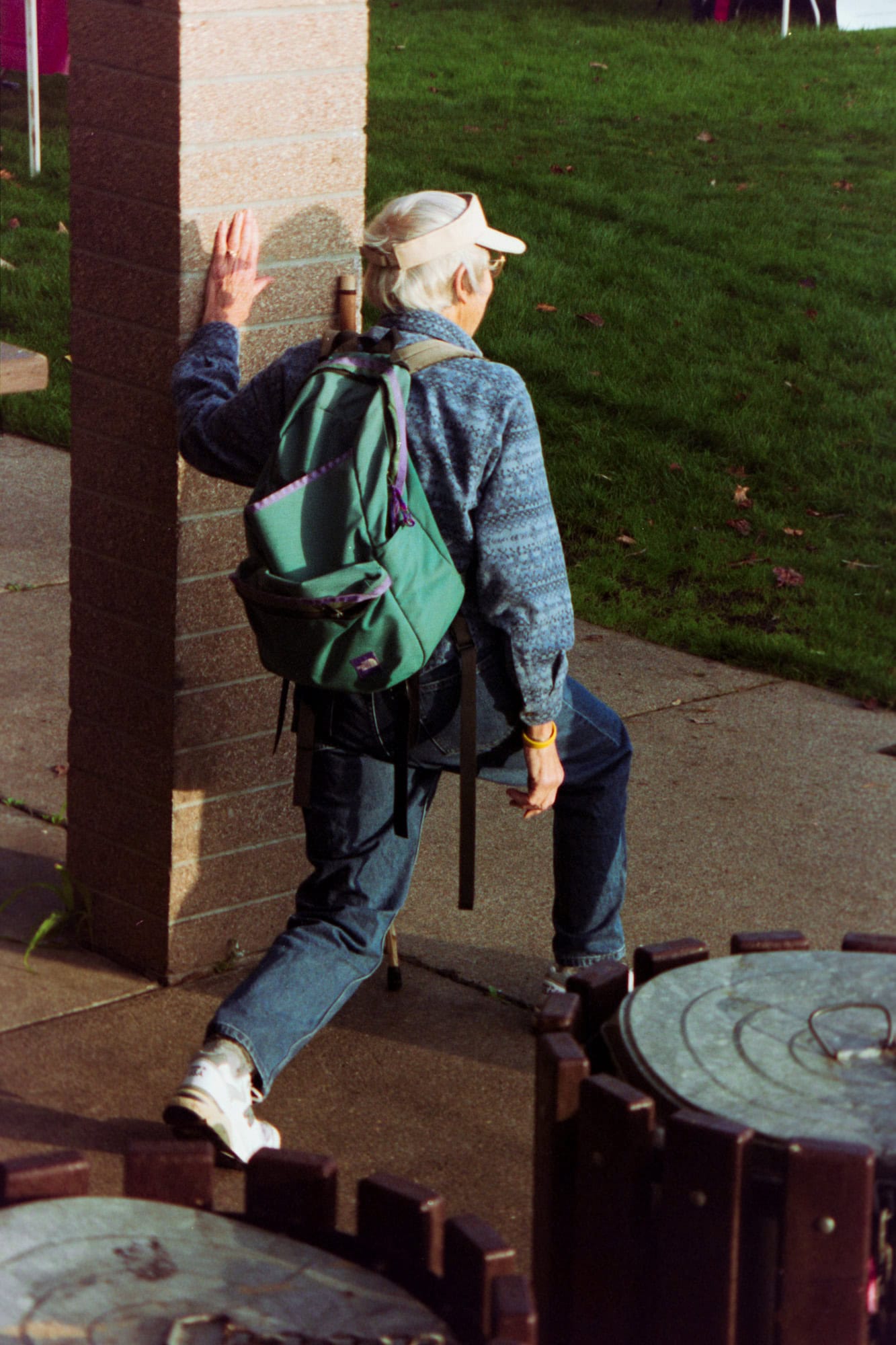

One such idea was the Lane County Heart Walk, a fundraiser for cardiovascular disease and stroke research that promotes physical fitness. A, no doubt, admirable event, yet not particularly the most exciting, according to myself at 19 years of age. But, for whatever reason, I jumped at volunteering to document it for the assignment.
It was at 6 am on a dewy, sunny morning. Several hours earlier than I was used to getting up at that time of my life. And as you’d expect, it was mostly just a bunch of people casually walking a pre-determined course around a large park, ending at a semi-circle of informational booths and a stage that seemed much too large for the number of people in attendance. I was bored out of my mind, as I had prophesied.
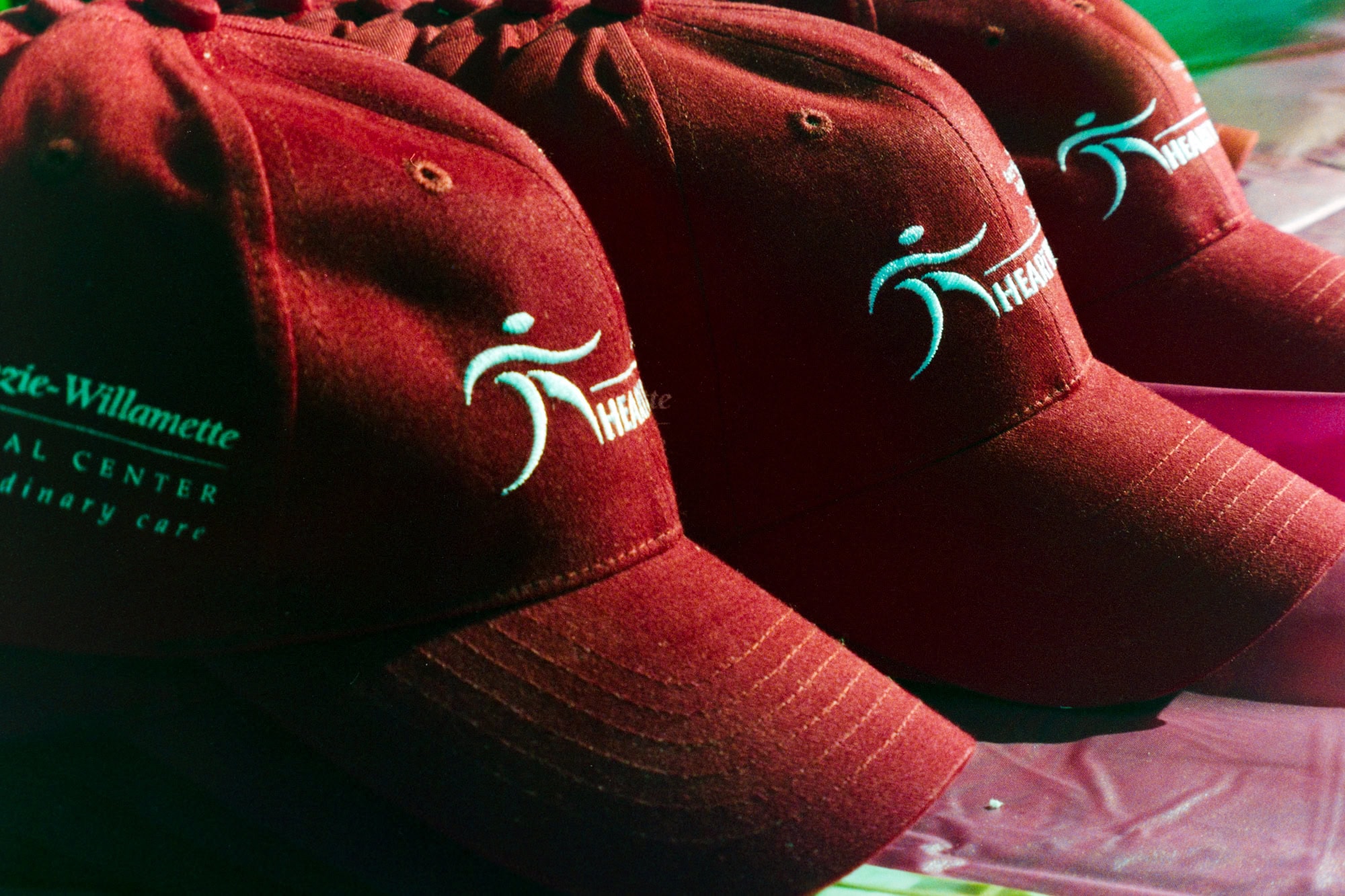
I spent the morning unenthusiastically following the walkers along their course, capturing mildly interesting but probably poorly exposed images of them in mid-stride while they talked about whatever one talks about while sipping on coffee at 6 am during a stroll. They wore red hats and red pins in affiliation with the theme of the event.
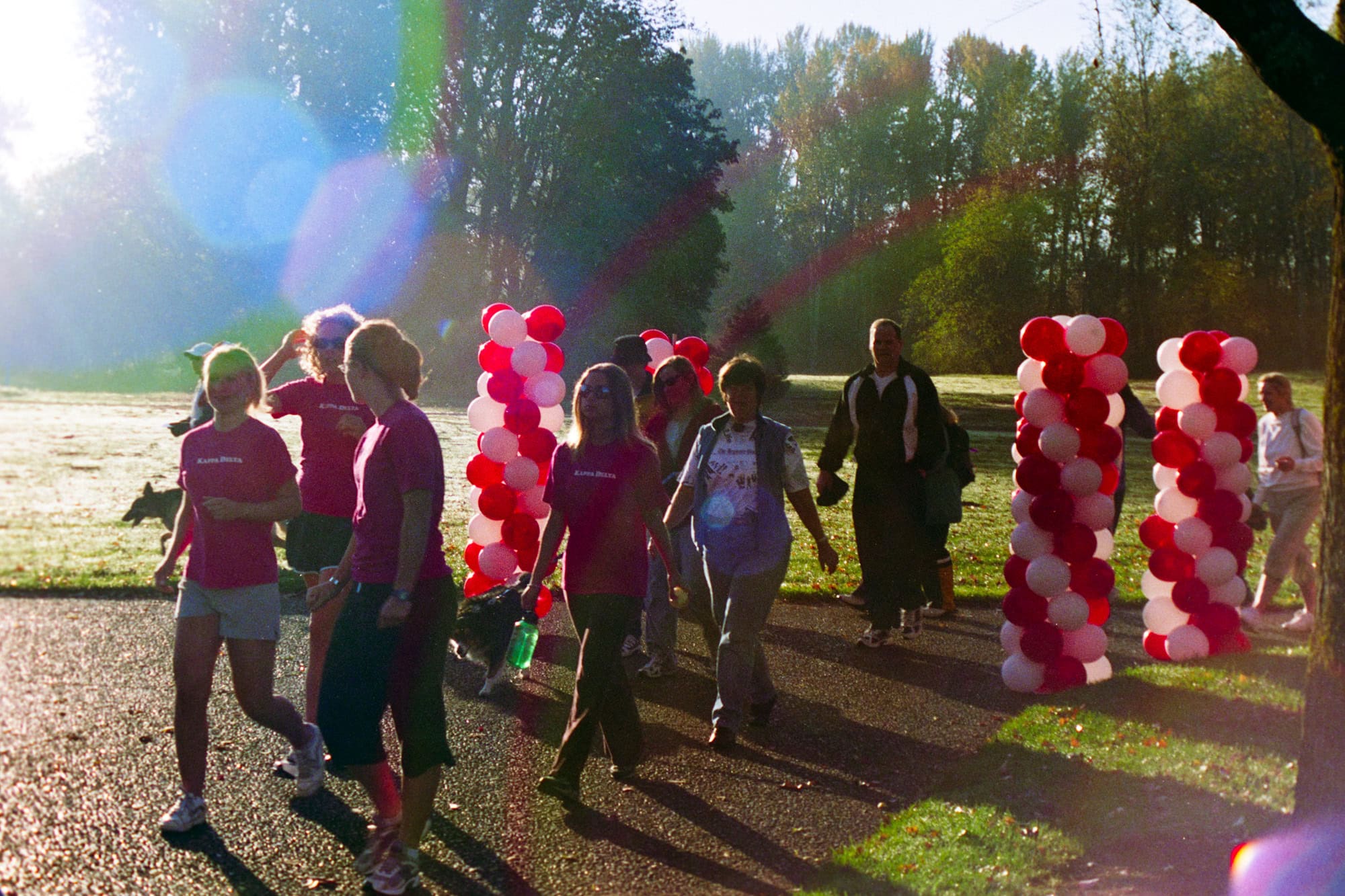
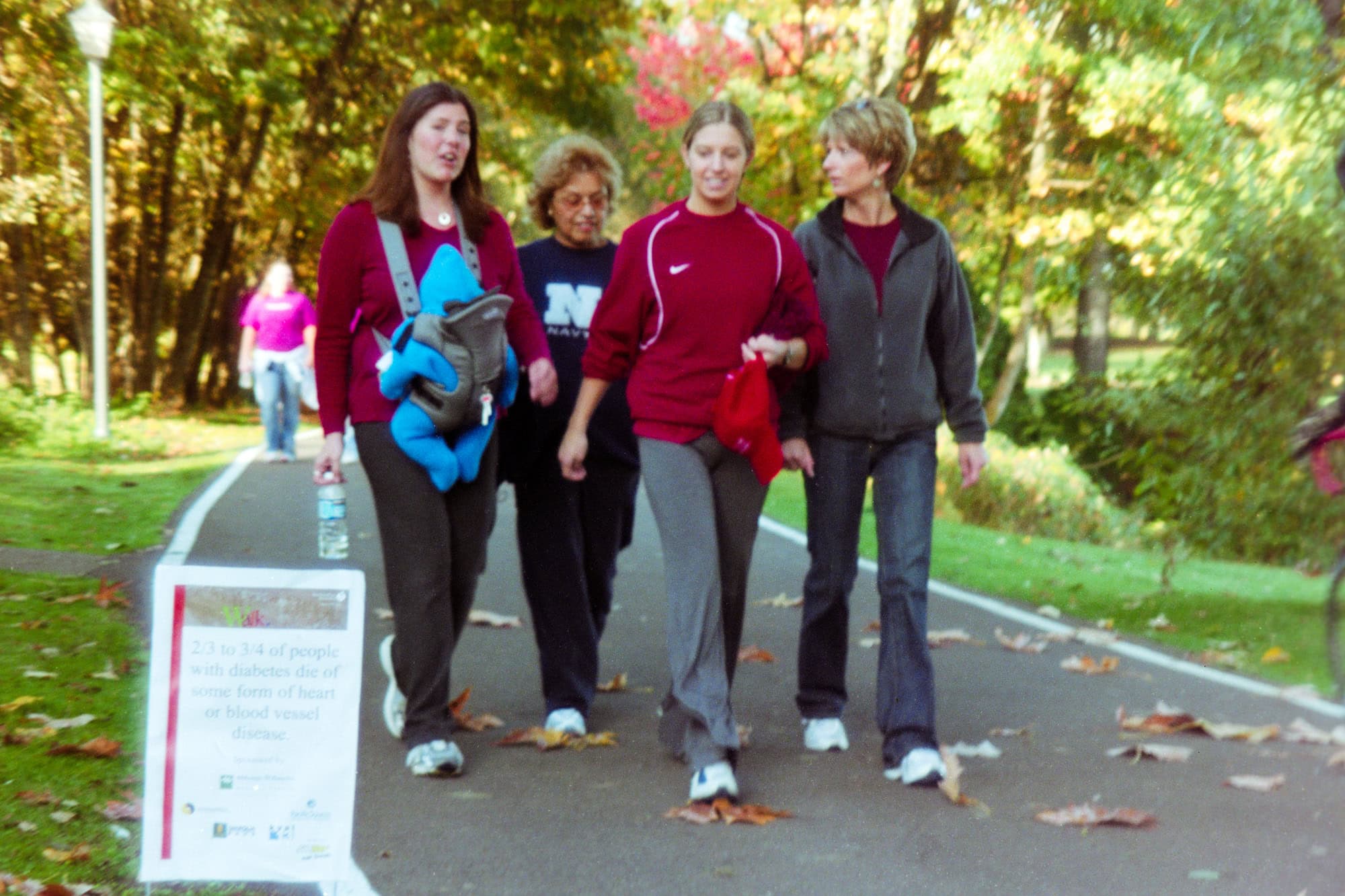
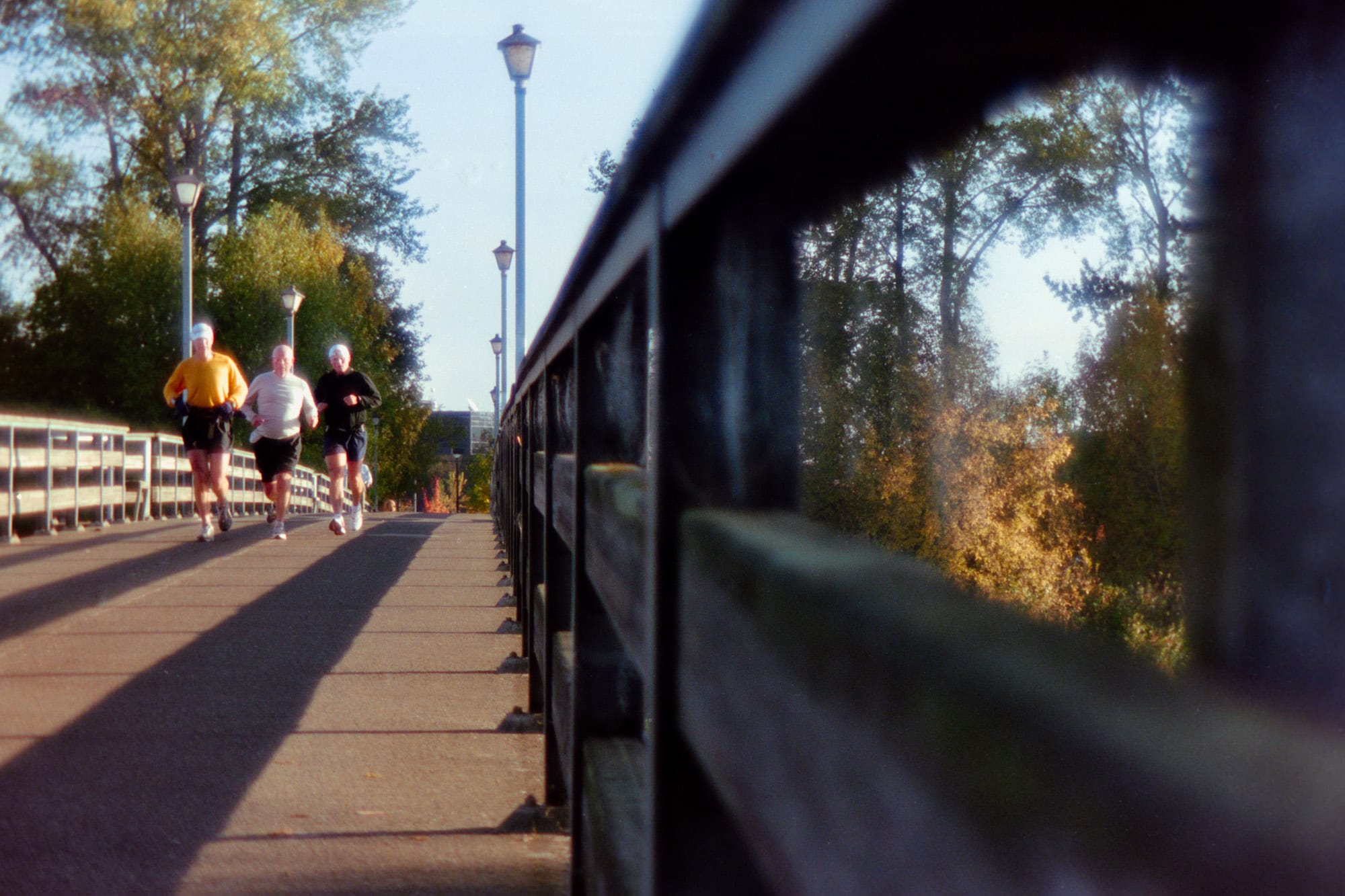
Eventually, I made it to the informational booths at the finish line, snapping a handful of images of red heart walk hats and pins laid out on the tables while the walkers converged on an open lawn in front of the stage, some casually stretching while others milled about. I searched in desperation for something I deemed interesting to photograph, something that might vault my class grade from a C- to a C+, and it was at this moment when a polka band took to the stage. At last something mildly interesting was transpiring and I decided that this was my time to shine!
I was reminded of a lesson I was taught in class about war photographer Robert Capa, famous for the saying, “If your pictures aren’t good enough, you aren’t close enough.” For whatever reason, this was a saying that had stuck with me, and still does to this day. And you better believe that, by golly, I was going to summon the bold, assertiveness necessary to mount that polka band stage and get up in front of that tepidly interested, thinly distributed group of middle-aged heart walkers and capture THE MOST meaningful and poetic image of that polka band that I could muster just like Robert Capa would on the front lines of the Spanish Civil War.
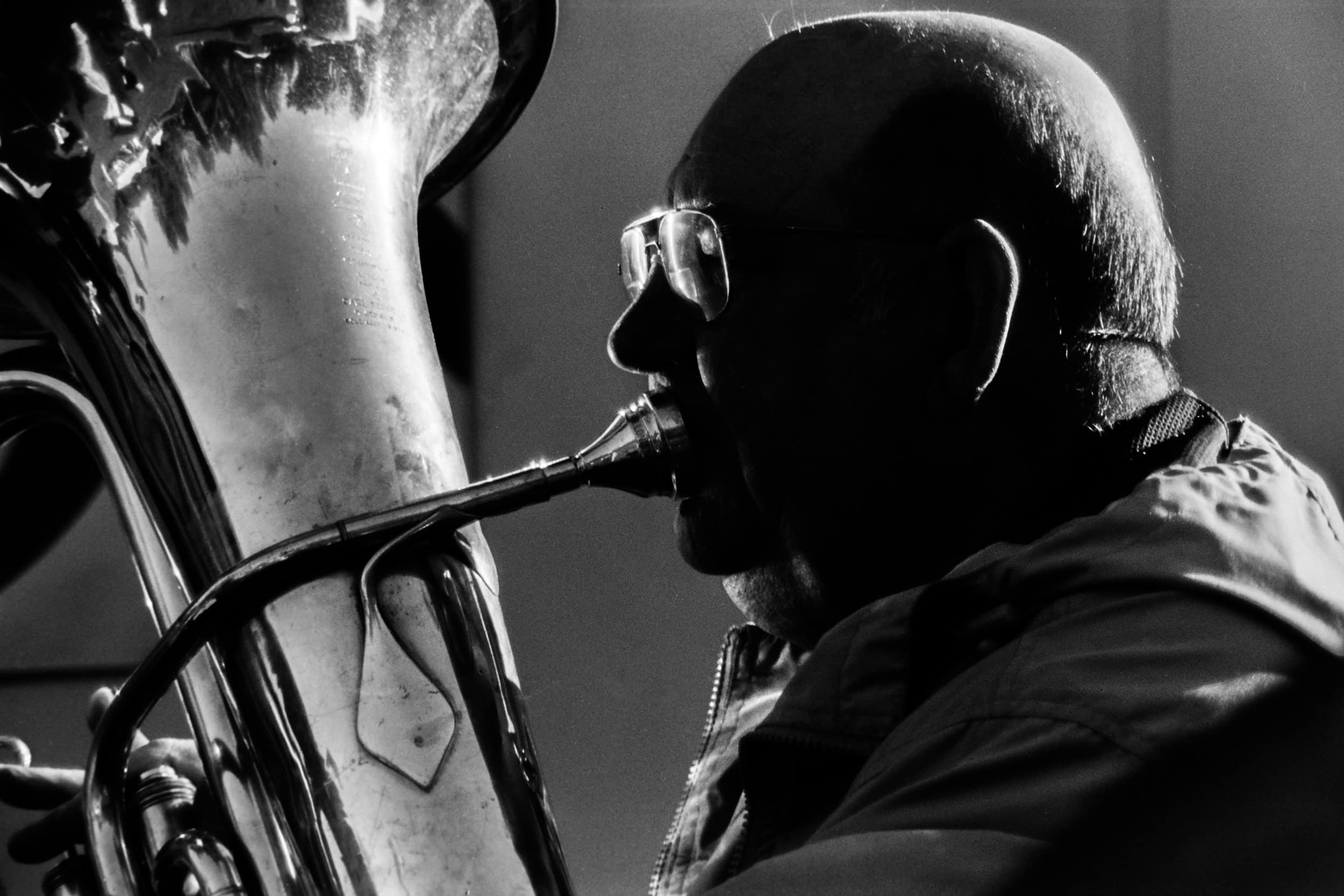
And did I ever mount that stage, standing front and center, turning my back to the crowd (bare them no mind!), placing myself between them and a balding, middle-aged euphonium player wearing glasses and a tan windbreaker, seated unceremoniously on a folding plastic chair.
This was my subject. My knees lightly bent, shoulders slightly hunched, hands steady, as a photographer ought to do when destiny calls.
Click.
I then scurried off that stage so fast, heart racing at the impropriety of me as a photographer putting myself between a musician and his rapt audience.
I still look back on this image, some 20 years later, as one of my favorite images I’ve ever taken. Certainly the most formative. It never did and it never will win any awards, but its qualities did teach me many things about photography: The close, intentional crop. The dramatic silhouette. How some images work better converted from color into black and white. The way the sunlight shines from behind the euphonium player from camera right, striking the brass of the euphonium, which in turn reflects the light onto the musician’s glasses.
This would later become my “Ah-ha!” moment, the genesis of my understanding of how light and objects interplay for creative effect and how a camera can be used to capture it.

Of course, I hardly knew what I was doing at all at the time of capture. It was basically blind luck that the photo was in focus. I most definitely did not know how to expose intentionally for a silhouette. Yet I did capture it, and it sat on an undeveloped roll for probably a week, and then remained unscanned and unobserved for another, before I finally found myself staring at it on a computer screen in class for the first time intrigued but still unaware of what it meant for my future.
It was then that my hard-ass professor walk up behind me, as he would do while observing the class as we independently edited our work.
“Who took this photo?” he asked bluntly.
“I did,” I responded.
“No, seriously, who took this photo?” He pursued unconvinced.
“I did.”
Pause.
“I would be proud to have this image in my portfolio,” he said matter-of-factly.
He then patted my shoulder and walked down the line to the next student editing their images.
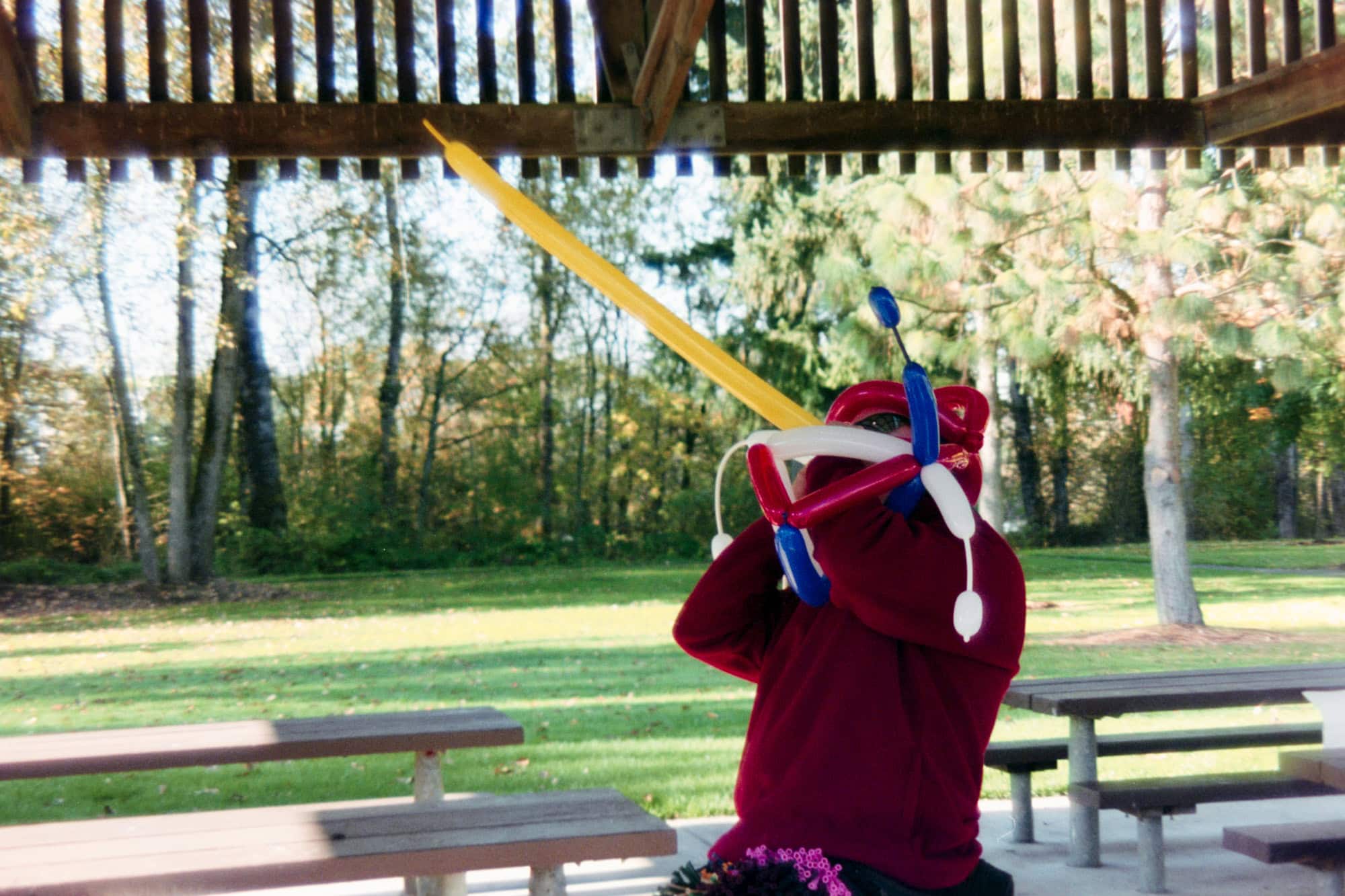
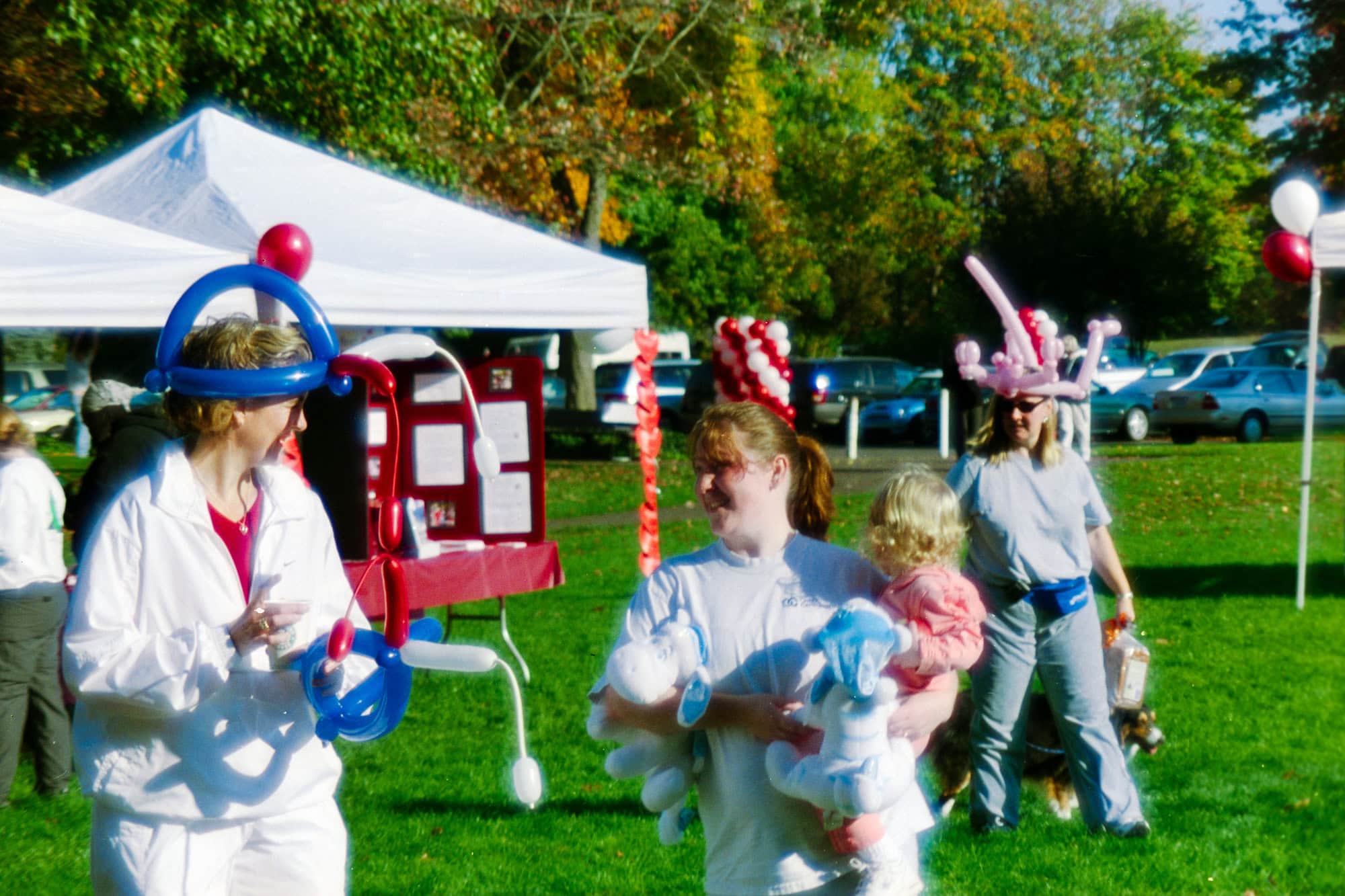
Boom! That was it. The seed was planted. I would become a world famous photojournalist the likes of which Robert Capa would envy. Or rather, I would eventually be asked by a friend to photograph their wedding because they heard I did photography as a hobby and that would snowball into an entire career. Not exactly the idealistic dreams of youth, but a fantastic journey nonetheless.
Rediscovering What I Loved About Film
I took a long hiatus from shooting film since my college days. Almost 20 years, in fact, only shooting the odd roll now and again. Digital fully took over my world. But there was something missing. The freeing feeling of not knowing exactly what has been captured. The excitement of getting a developed roll back. The anticipation of scanning it and seeing the images for the first time a week or more after capture. The not always predictable results that hide little lessons and inspirations.
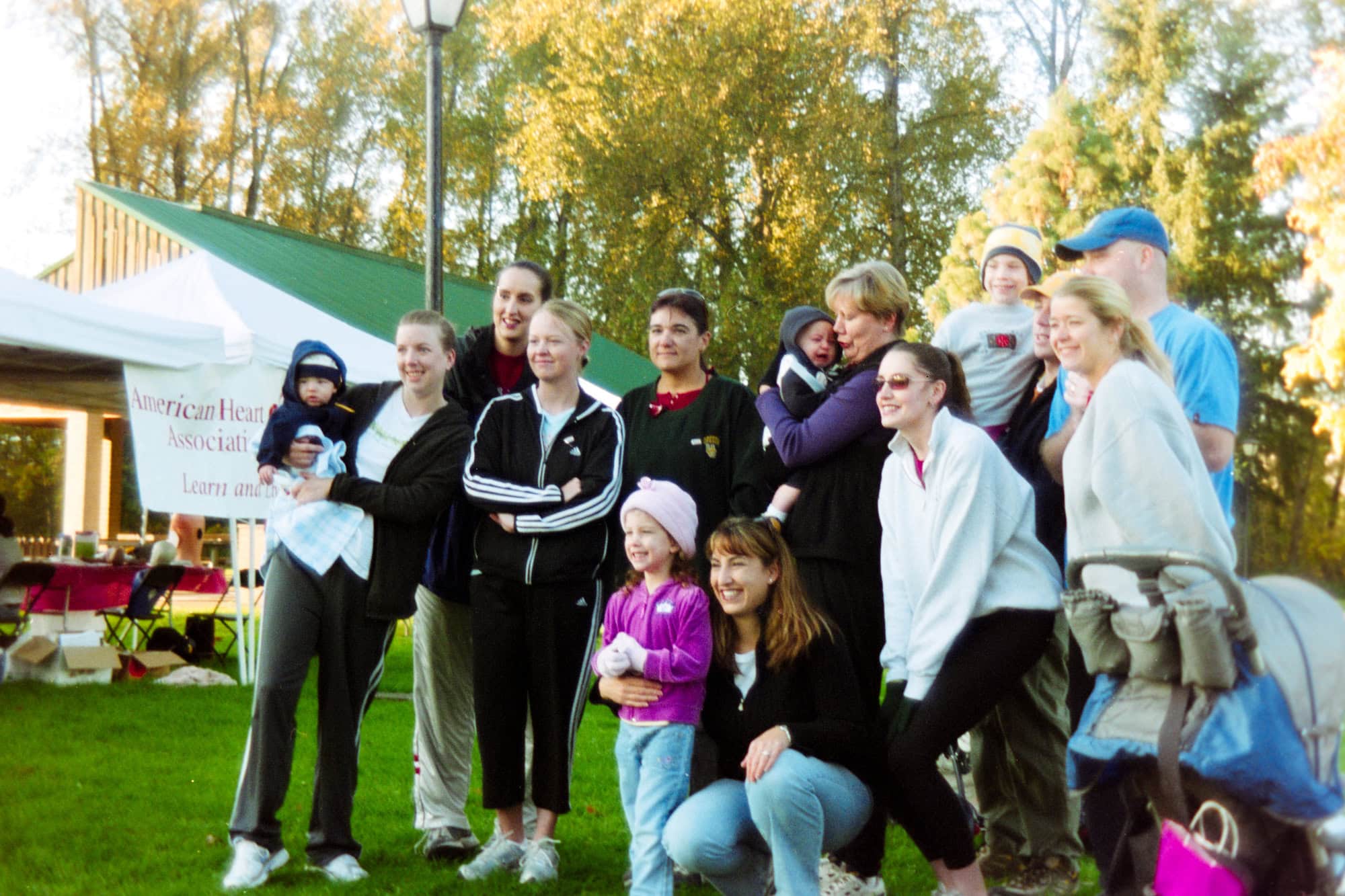
It all started with one of the first rolls of film I ever shot, a camera of my father’s later stolen, and a singular image taken at an event I begrudgingly photographed. That roll taught me lessons about light that still resonate with me today, finding beauty in what I perceive to be mundane, which I now use with intentionality. And it was all one big happy mistake to be discovered on one frame weeks after capture!
Why I Shoot Film at Weddings
That is why I decided to bring film back into my workflow and offer it to my clients, partially for selfish reasons, but also because I think film hides little secrets for us all in its organic emulsions, and despite all the wonders of the digital era, those secrets can go left undiscovered. I want to unearth more of them shooting film, and I’m hoping those couples who value the aesthetic of film might want to join me in hunt for those special moments.
Weddings are particularly well-suited to film photography, full of moments that aren’t necessarily important because they’re perfectly composed or technically flawless. They’re important because they’re fleeting and emotional. Estranged parents sharing a hug on their daughter’s wedding day. The bride rubbing the belly of their pregnant maid-of-honor. Stark sunlight falling across the groom’s face during the ceremony as a tear glides down his cheek.

Digital photography is extraordinarily good at giving me the control and reliability I need to documenting all of this. Film gives me something else. It makes me slow down, pay attention, and accept a little uncertainty. And sometimes, when I finish scanning the film, there’s a photograph hiding among those 36 exposures that blows the doors off anything I captured digitally.
That’s part of what I love about bringing film to weddings. For all of its qualities, organic grain, rich colors, broad tonal dynamic range, it’s in large part the intentional process and sense of surprise that keeps me shooting film. And sometimes I get to relive that “Ah-ha” moment and share it with the couples I’m documenting when I deliver their galleries.
Learn more about my Portland analog film wedding photography here.