
A lot of couples entering the elopement planning process don’t have a planner, so they often don’t consider the finer details of planning their elopement ceremony or vow exchange.
Compared to a big wedding ceremony, an elopement ceremony doesn’t have as many moving parts to consider. For example, you won’t need a plan to seat a bunch of guests, you won’t have to decorate a big reception, and you won’t have to coordinate with a large wedding party.
But some thoughtful, careful planning can enhance your elopement ceremony experience and set you up to receive beautifully composed images. Below, I’ve outlined tasks and questions to consider and complete in a rough order when planning your elopement ceremony.
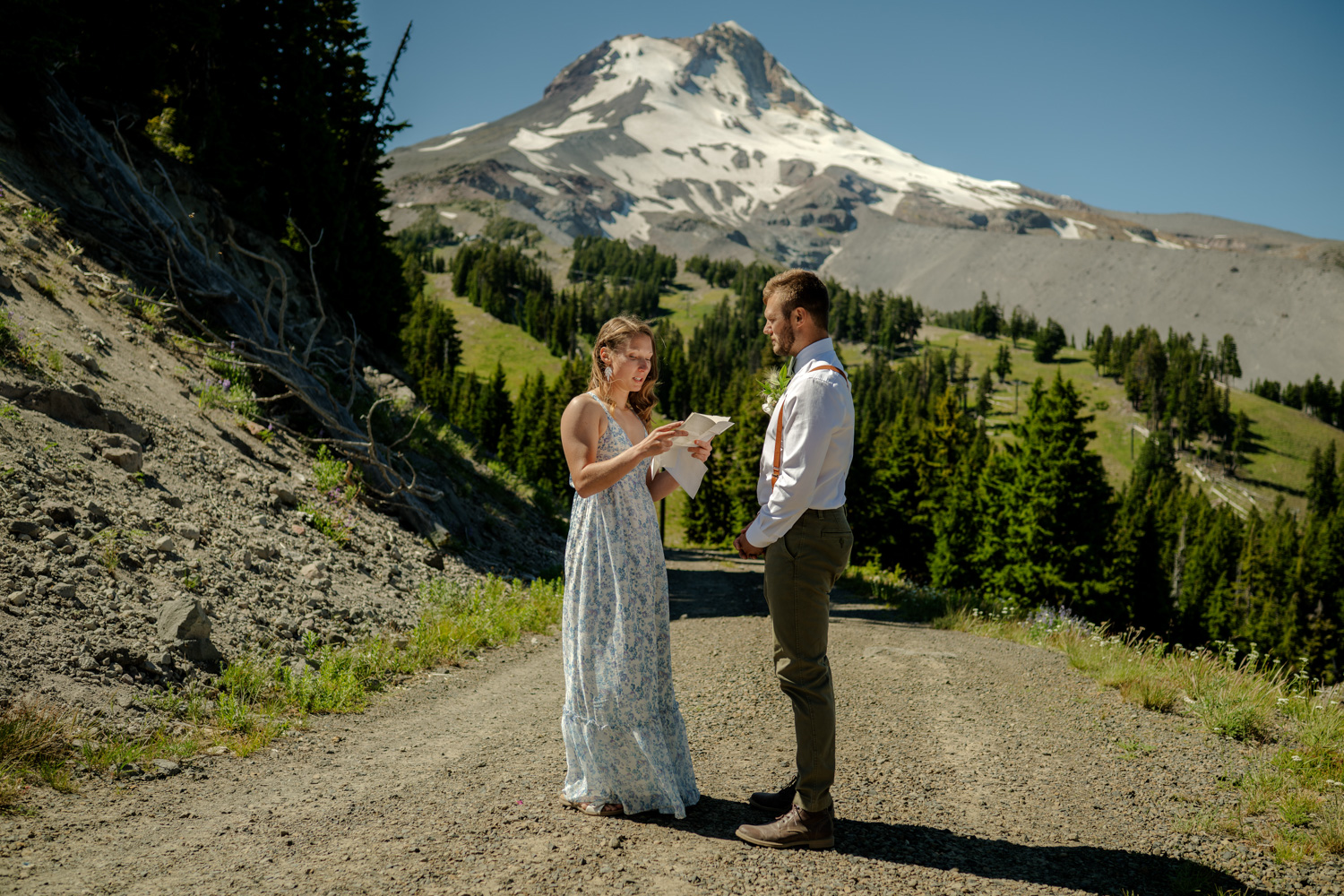
Pick Your Elopement Ceremony Location
The first step in planning your elopement ceremony is determining where you’ll say your vows. As a Portland, Oregon-based elopement photographer, I’ve shot in every corner of the state and have a growing list of Oregon elopement location suggestions, ranging from cozy city parks in Portland to epic, far-flung outdoor locations in southeastern Oregon.
Sit down with your partner and consider the environment in which you’d like to elope. If you’d like some brainstorming ideas, feel free to explore my list of Oregon elopement locations list.
Choose Your Elopement Ceremony Backdrop
Once you’ve chosen where you’d like to elope, the next important step when planning your elopement ceremony is determining the backdrop that will be behind you when you say your vows.
Places like the Painted Hills in eastern Oregon, Hug Point on the Oregon Coast, and Peninsula Park in Portland are large locations with many options for a background. If you have the option to explore your elopement ceremony location in advance, you might want to consider which visual aspect of the location is most beautiful or meaningful to you and use that as your background.
At Cape Kiwanda, for example, you could stand below the cape with the sandstone bluffs rising above you. Or you could hike up the giant sand dune and capture the beach sprawling below you. Or you could hike out onto the cape and have the coastline in either direction as your backdrop.
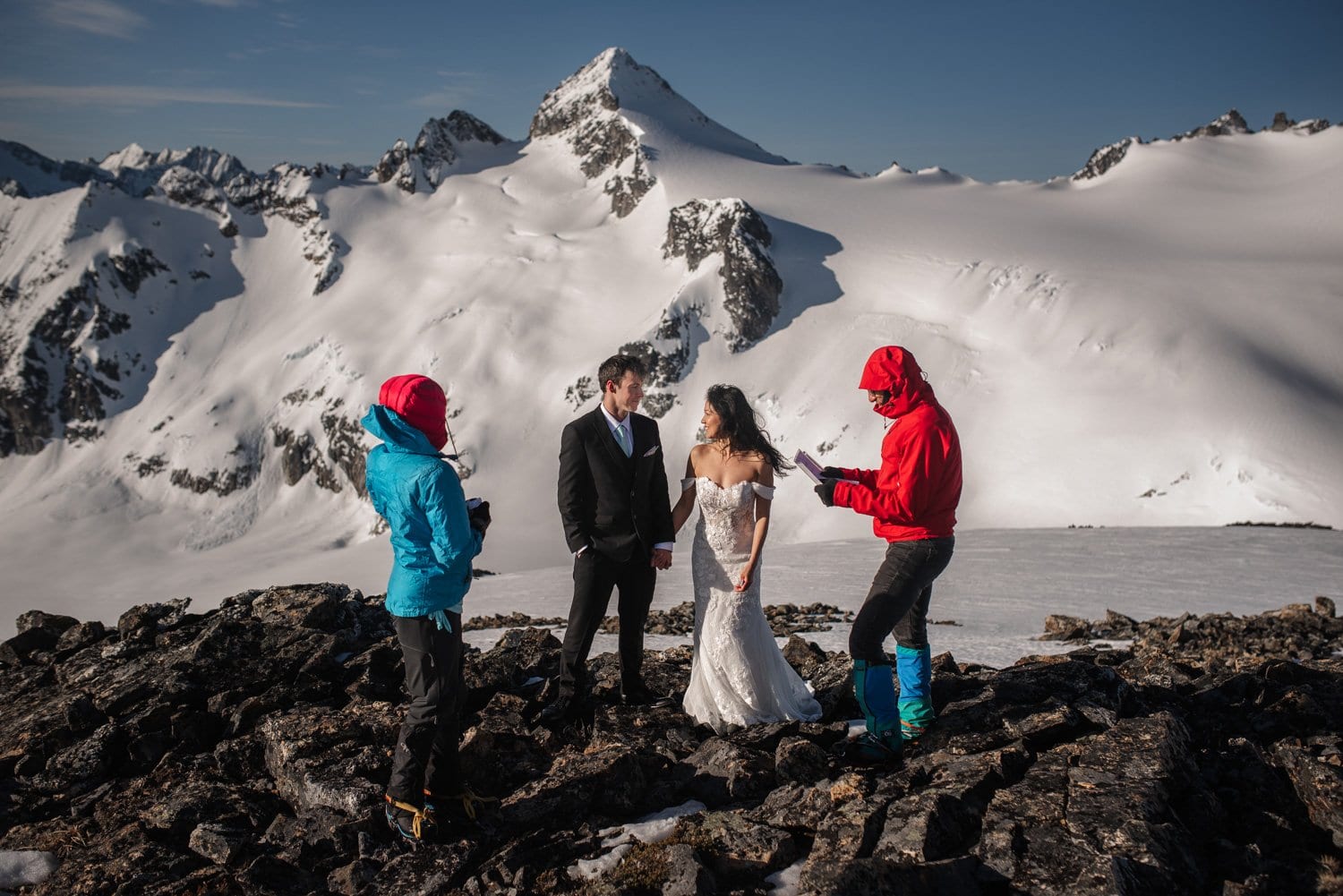
Determine Where And How You Will Stand
Great, you’ve chosen the background for your elopement ceremony at the perfect location. The next step is considering where you’ll stand. A given backdrop might have various perspectives to view it from.
At Latourell Falls, for example, most couples will, of course, want the waterfall as their backdrop. But there are numerous places to stand. There’s the cement pathway overlooking the falls, where you’ll be safe from any mist from the falls. There’s the rocky landing right up close to the falls, where you might get a little wet. And there’s the streambed, where you can stand on some rocks a little farther back from the falls. All are great options but offer unique perspectives.
Additionally, consider how you will stand. Elopements are great for being informal, but getting on the same page with your partner about how you plan to stand and any choreography will eliminate awkwardness on the day. How far apart do you plan to stand? I generally recommend being within hand-holding reach.
Do you plan to hold hands the entire time while you say your vows, at specific moments, or just when it feels natural? One hand or two hands? Would you prefer to face your officiant for the opening part of the ceremony and then turn toward each other when you say your vows, or face each other the whole time? If you have a couple of guests, will you turn toward them together to acknowledge them at a certain moment?
While over-planning this aspect of your elopement ceremony might seem like a bit much, at least getting on the same page with your partner about how you’d like to stand and choreograph your movements will ensure you’re synced up, so you can just focus on being with each other.
Determine Time Of Day For Your Elopement Ceremony
The next aspect to consider when planning your elopement ceremony is the time of day. Are you an early-morning type of couple who likes the idea of saying your vows at sunrise? If so, keep in mind that you’ll have to wake extra early to get ready and possibly travel to your elopement ceremony location to catch the best light.
Do you like the idea of doing your elopement ceremony in the middle of the day so you can do activities on either side of the ceremony? Keep in mind that the middle of the day might not have the best light, but if that doesn’t matter to you, then plan according to your priorities.
Or does an evening ceremony with the sun setting behind you sound extra romantic? An evening ceremony will give you more time to get ready, and it generally has the best light. Many photographers prefer the last couple of hours of the day for taking photos.
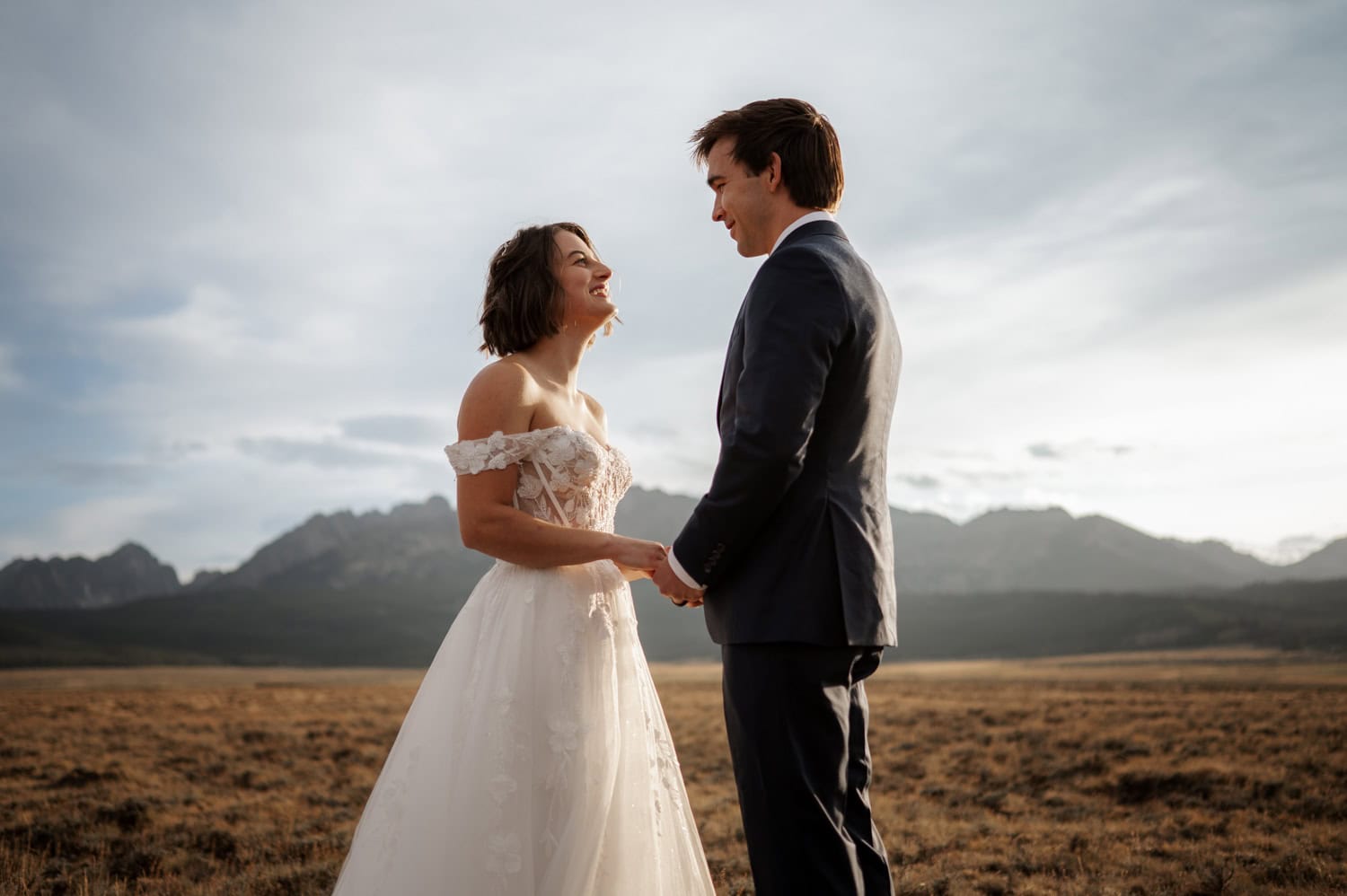
Take Into Account Lighting At The Planned Time
Depending on the time of day, the elopement location and backdrop you’ve chosen will almost certainly look drastically different.
At certain times, where you plan to stand might be in complete shade while your backdrop is in bright sunlight, which could result in a blown-out background or an overly dark foreground. Or maybe only half of your ceremony location will be in sunlight, which you definitely want to avoid.
In the morning, the sun will be in a different position than in the evening, which will determine whether your photos are backlit, side-lit, or directly lit from the front by the sun. All have their pros and cons and could affect how hot you are and the quality of light in your photographs.
Choose And Consult With A Photographer Before Finalizing
This is a very important step. Consulting with your elopement photographer should not be overlooked. Choosing a photographer who fits your personality and goals will ensure that they mesh well with you on your elopement day and provide advice that aligns with what’s most important to you.
You may have carefully considered all the previous steps suggested in this guide, thoughtfully selected the location and backdrop, and chosen exactly where you’d like to stand with the time of day and lighting taken into account.
That said, a professional elopement photographer may have additional insight into the location and lighting concerns that you may not have considered. So it’s important to be flexible and keep an open mind. They may know of an extra-cool perspective or have lighting knowledge that could enhance your experience and photographs.
Sometimes, they may not be able to provide this advice until the day of the elopement, when they have a chance to see the location if it’s hard to reach. So it’s not unusual for exact plans to change a little based on photographer recommendations. Ultimately, it’s in your hands whether you take those recommendations if they conflict with your vision.
If you’re unsure about how to go about hiring a photographer for your elopement, check out this guide on how to choose the right elopement photographer who fits your needs and aesthetic.
Determine Travel Plans To The Ceremony Location
Elopements are definitely more flexible time-wise than a traditional wedding. But carefully planning your travel arrangements in advance will ensure that everything goes off without a hitch, so you’re not stressed and don’t miss the best light.
Google Maps is your friend in this situation. But don’t just use the Google Maps drive time as the total amount of transportation time needed. Buffer your travel time to accommodate unforeseen traffic, loading and unloading, and walking to and from locations. Taking these elements into account and allowing for a more leisurely travel experience will help you stay relaxed and in the moment.
For far-flung locations that require air travel or long drive times, consider arriving a couple of days in advance so you’re rested on the day of the elopement. Familiarize yourself with ground transportation timing if you’re taking a ride share, taxi, or public transit.
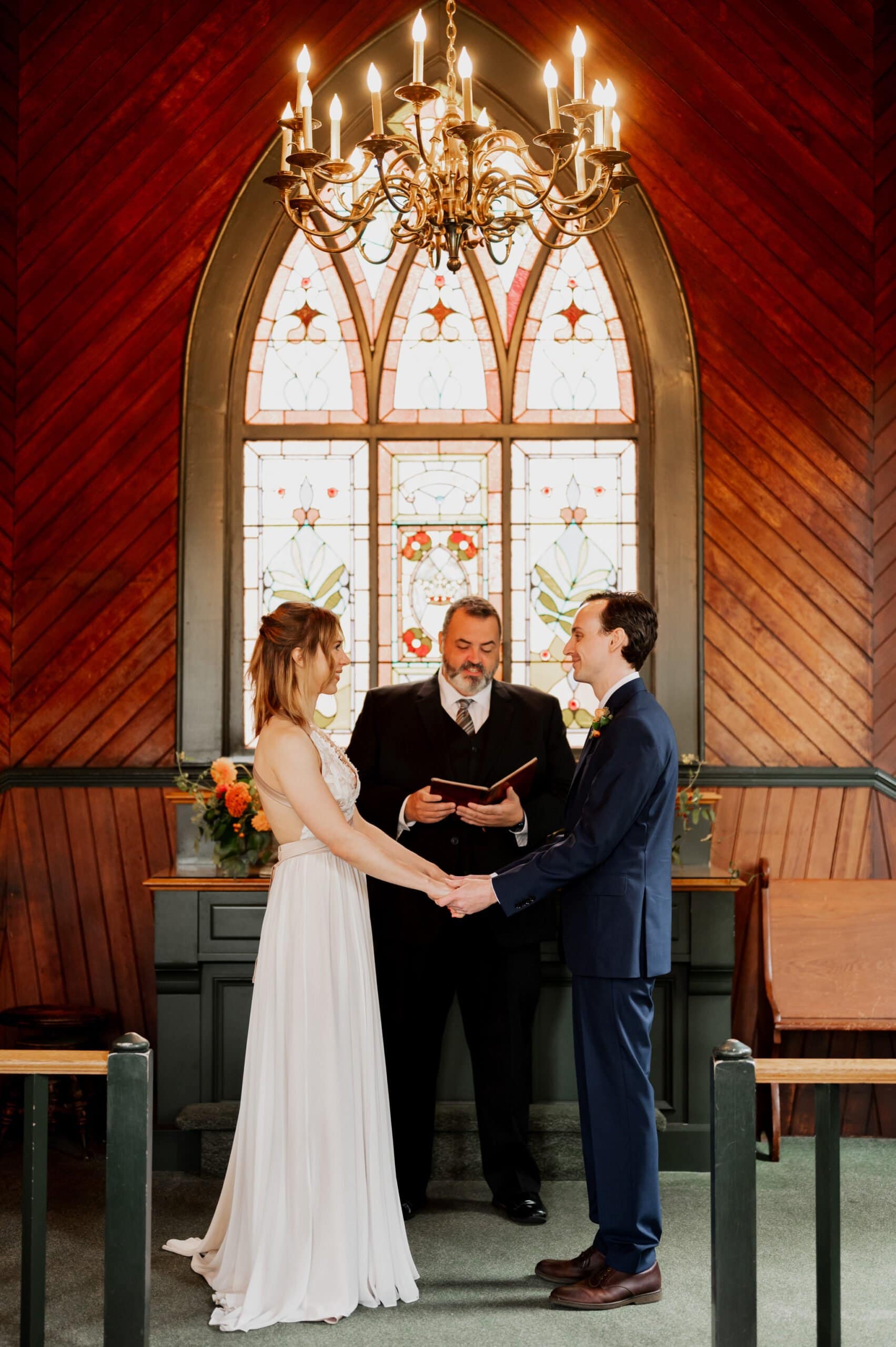
Will You have An Elopement Ceremony Officiant?
While a traditional wedding will typically have an officiant, that doesn’t necessarily mean you absolutely have to have one for your elopement ceremony. With elopements, you can forego traditions and do things out of order.
If you want, you can legally get married at the courthouse and sign your documents to make it official in the eyes of the state. Later, you can have your more personal, meaningful elopement ceremony either before or after in the location of your dreams.
If you’d prefer it to be just the two of you sharing words in solitude during your elopement ceremony, without anyone standing between you, that’s perfectly fine. Or, if you’d like an officiant to guide your elopement experience, that’s cool, too.
Just remember, you’re eloping, and you can make the experience exactly as you want.
If So, Choose Your Elopement Ceremony Officiant
In crafting your elopement ceremony experience, choosing an officiant (if you’re going to have one) is an important decision.
There are many hirable officiants to choose from in Oregon, and they all come with different backgrounds and personalities. Some may also be more or less willing to travel or hike to the location that you have in mind. So, clearly explaining what you have planned to them will help ensure they’re a good fit.
Another option would be to ask a friend to officiate. Someone who has a personal connection to you and your fiancé may be more meaningful to have along, and they’ll likely have a couple of stories to add to flesh out the ceremony.
Just like when choosing your elopement photographer, having an officiant with a personality and connection to you that fits the vibe you want will positively enhance your experience.
If you’d like some elopement officiant recommendations, you can check out my list here.
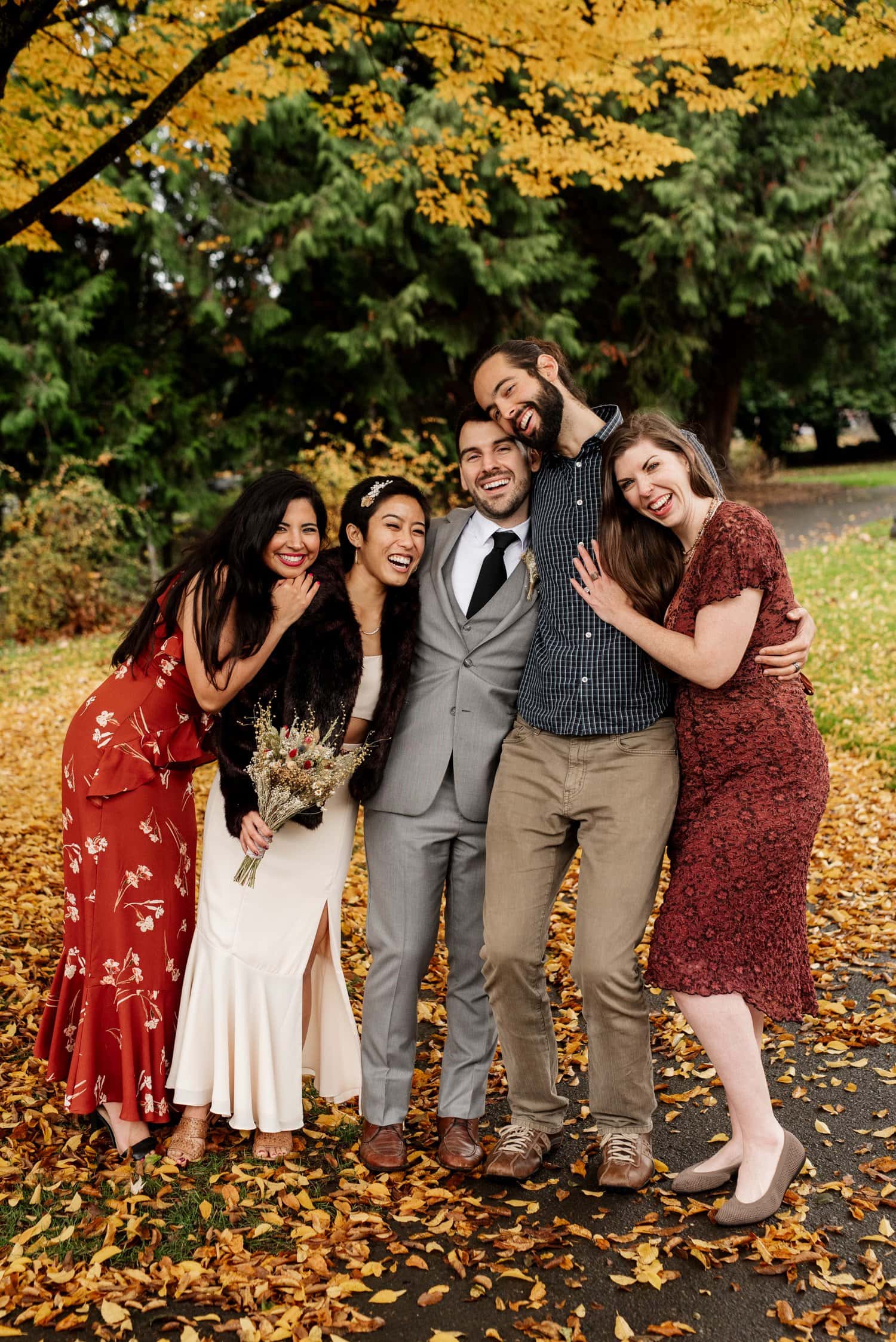
Will You Have A Handful Of Guests?
The line between what constitutes an elopement and a wedding can be blurred, and various wedding professionals may have guest limits that determine pricing.
I’ve personally shot elopements with just the couple, and I’ve shot elopements with as many as 20 people. As an elopement photographer, the distinction doesn’t particularly matter to me. I believe you should have exactly who you want beside you, whether it’s just you and your partner or a handful of friends.
As a couple, it would be important for you to discuss this element of your experience and whether the intimacy and privacy of being alone together is more important or desirable than being surrounded by your closest friends and family.
If So, Will Your Guests Be Incorporated Into The Ceremony?
If you’ve decided to have a handful of guests join you during your elopement ceremony, they can be spectators, or they can be incorporated into the flow of the ceremony in meaningful ways.
Take into account your partner’s expectations and your guests’ personalities and willingness to participate in the way you envision. Asking your guests to participate might help flesh out the proceedings so your ceremony feels more robust.
However, if you feel this might distract you from connecting with your partner, then asking your guests to just spectate might be the way to go.
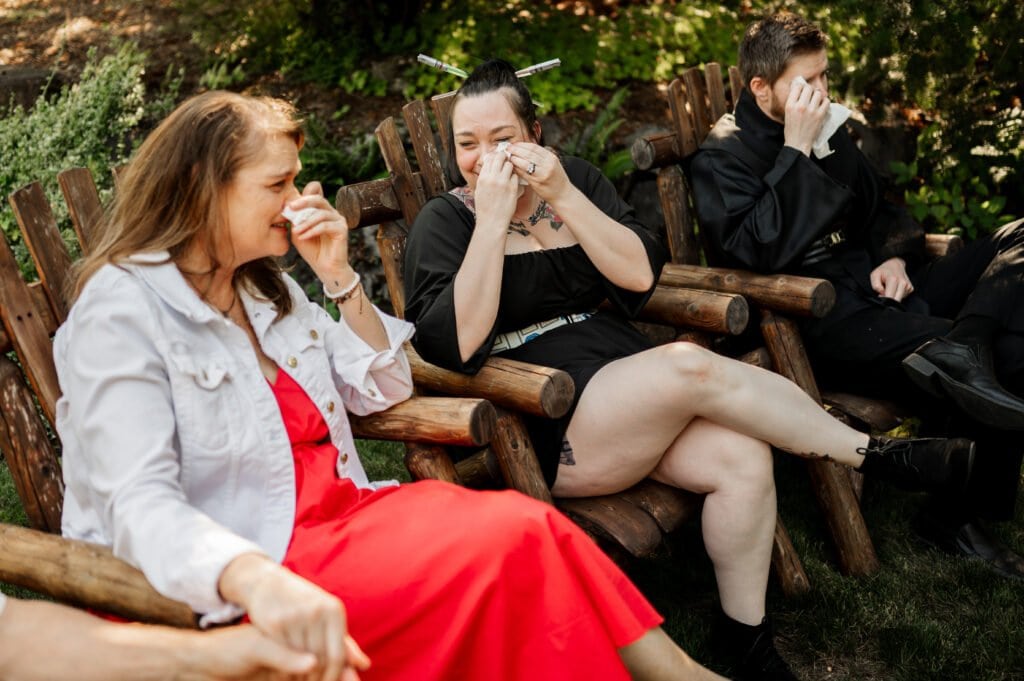
If participating, How Will Your Guests Be Incorporated?
If you’d like your guests to participate in the ceremony, there are various creative ways to incorporate them. Your guests could:
- Officiate
- Read a poem or passage
- Play an instrument
- Assist with a hand fasting
- Wrap a blanket around you
- Blow a conch
- Perform or join in on a dance
- Tell a story
- Hand over the rings
- Straighten your dress
- Hold your flowers
Where Will Your Guests Stand Or Sit?
Just because you’re eloping and only have a couple of guests doesn’t mean that you shouldn’t consider how you’re going to accommodate them during the elopement ceremony.
The elopement location you’ve chosen may be on a narrow landing, in a confined space, or be impractical to transport seating to. There may be only so much room for your guests and your photographer to move around.
Will your guests stand or sit? Consider whether you want them to gather close or stand at a distance, parted down the middle. Finally, think about whether your photographer will be able to get the perspective you want based on where your guests will be standing or sitting.
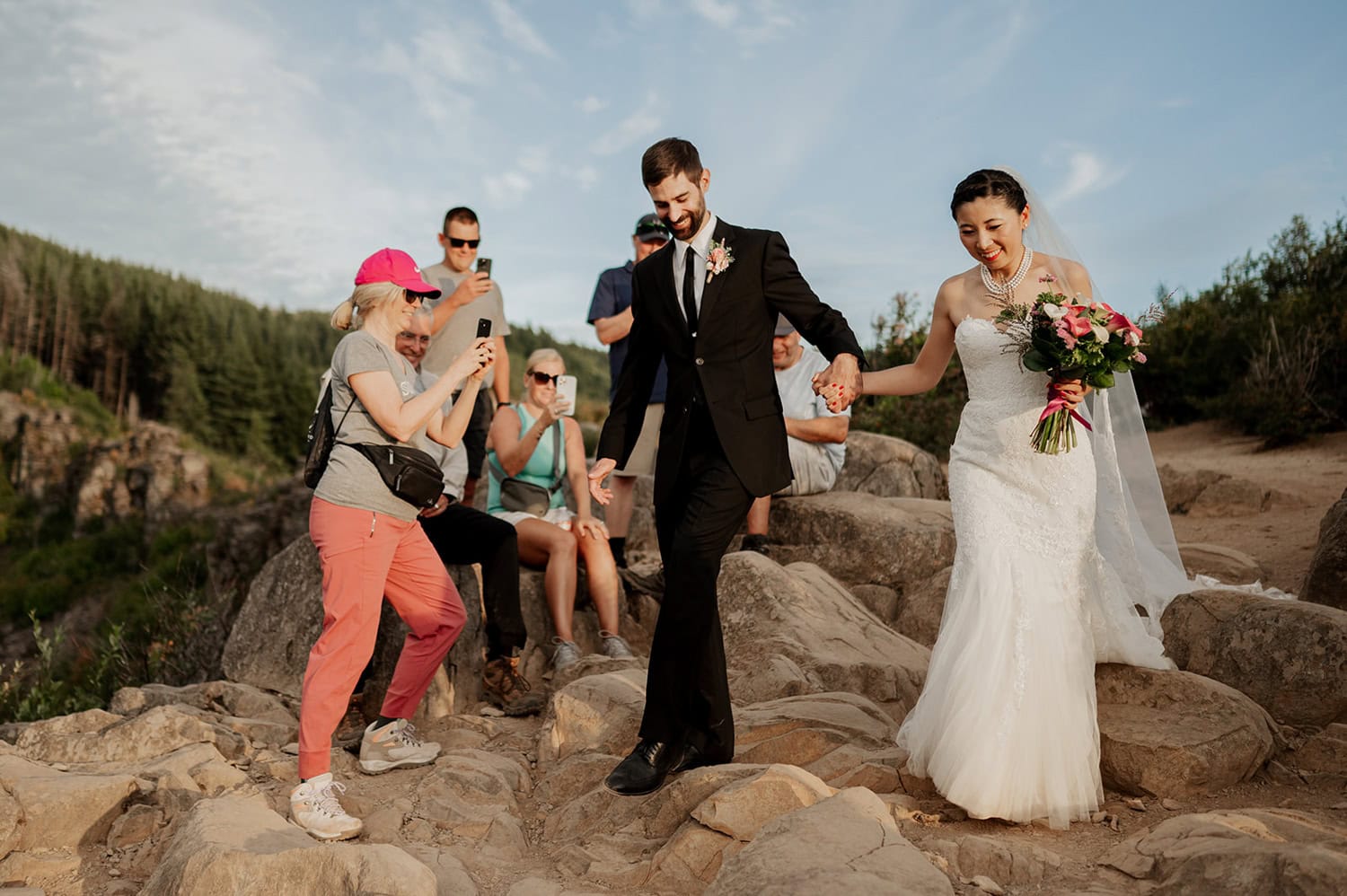
What Are Your Expectations About Guest Cameras?
Unplugged ceremonies during big traditional weddings have been the norm for a while, but due to the informal nature of elopements, we sometimes forget to consider this.
Do you want the few guests you might have to have their camera phones out during your intimate elopement ceremony? Consider that with so few people, the extra devices might be even more distracting.
If you’re getting married in a natural setting, the presence of technology might take you out of the moment. Consider the vibe you want during your elopement ceremony and clearly communicate your expectations around cameras to any guests you might have.
When Should Guests Arrive To Your Elopement Ceremony?
Chances are, if you’re eloping, you may be doing it for a more intimate experience with your partner. So your guests may be participating in only certain parts of your elopement day. Are they joining for the full day, just the ceremony, or for a few events throughout the day? Between you and your partner, decide what portions of the day you’d like your guests present for, and based on that, communicate to them when you need them to arrive.
Usually, it’s a good idea to give them a buffer so that they’re arriving 15 to 20 minutes before the event they’re participating in. This will ensure your elopement timeline stays on schedule and that you don’t miss the best lighting of the day for your portraits.
Take Into Account Weather And Conditions
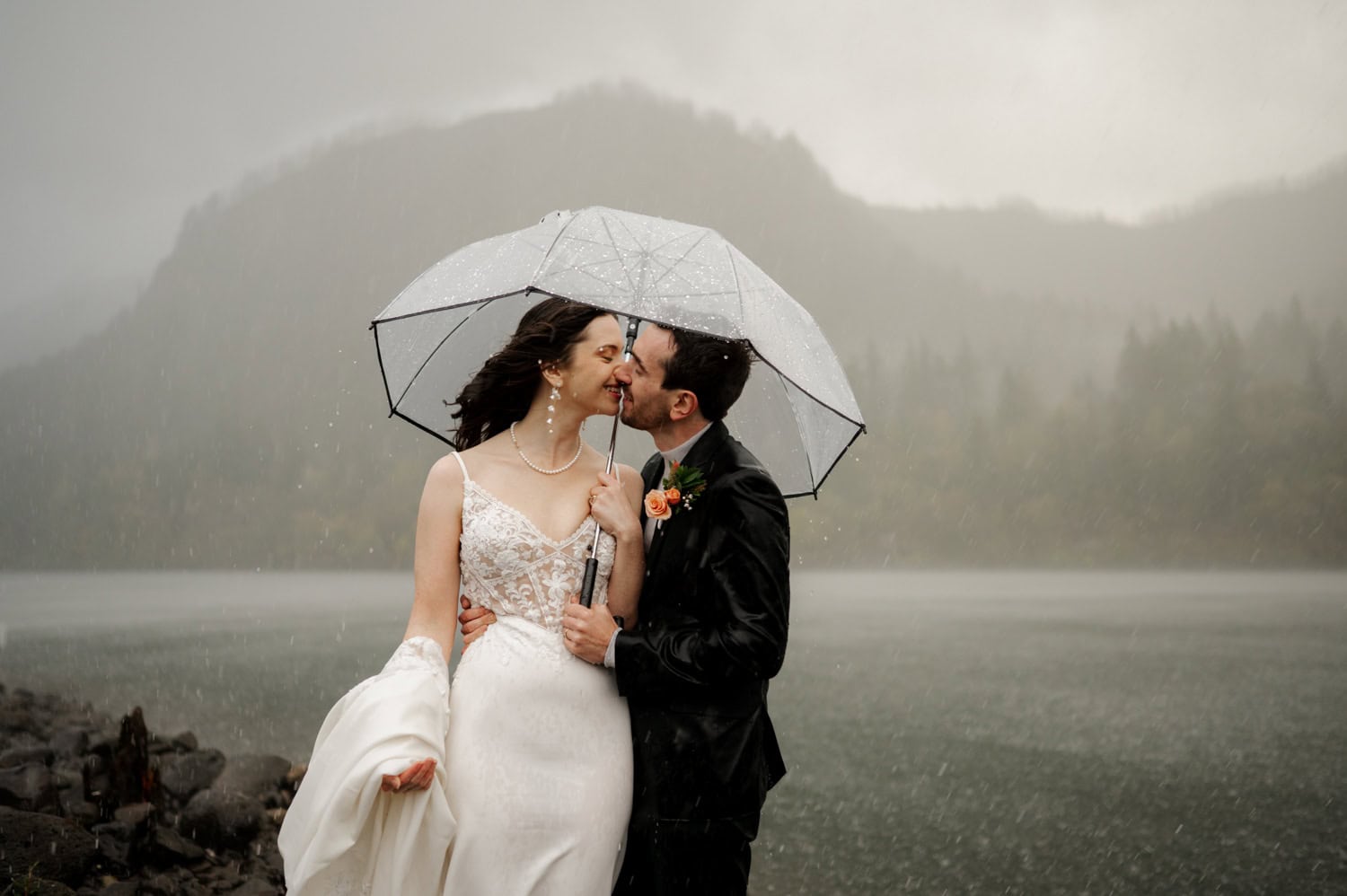
If you don’t have the option of rescheduling your elopement ceremony due to unfavorable weather, you’ll have to roll with the conditions. Having a plan for rain or shine is a good idea. Click here for a complete seasonal guide to eloping in Oregon. Here are some things to consider:
Clear Umbrellas — In rainy conditions, this will keep you somewhat dry while letting light through for photos.
Appropriate footwear — If it rains, rocks will be slippery and trails might be muddy. Good traction will help you stand comfortably without falling.
Warm Shawl — If it’s chilly, a warm shawl might help you stay warm despite the sleeveless dream dress you purchased before the weather took a turn.
Rain Jackets — A couple of rain jackets will keep you dry if you have a hike planned.
Wear Your Hair Up or Down — Wind and rain can wreak havoc on your hair. If you’re concerned about frizzy hair or hair hitting you in the face while saying your vows, an updo might be worth considering. With the right updo, you may be able to let it down for some photos if conditions are favorable.
Long or Short Dress — A longer dress might look incredible but drag through dirt, collect sticks, and get wet quickly, while a shorter dress lets you maneuver through uneven terrain. Use your best judgment when deciding how much dirt you’re willing to encounter.
Get Changed After Reaching the Ceremony Location — On hot or rainy days, you might want to change into your wedding attire once you’ve reached the ceremony location so you’re not drenched during a hike. You might have to change behind a blanket or natural cover if you’re in a remote location.
Write And Practice Your Elopement Ceremony Vows
If there’s one thing people procrastinate doing most, it would be writing their vows. Sometimes they’re written just minutes before the ceremony.
Giving yourself ample time to write your vows days in advance or the morning of the elopement will help ensure you can work through and vocalize your feelings as accurately and meaningfully as possible.
Keep in mind that writing your vows can be a wonderful thing to photograph if you’ll be doing it the day of your elopement. Let your photographer know so they can plan on capturing it.
Taking some time to also read through your vows and practice them aloud can help ensure you deliver them without stumbling over your words or feeling nervous about it.
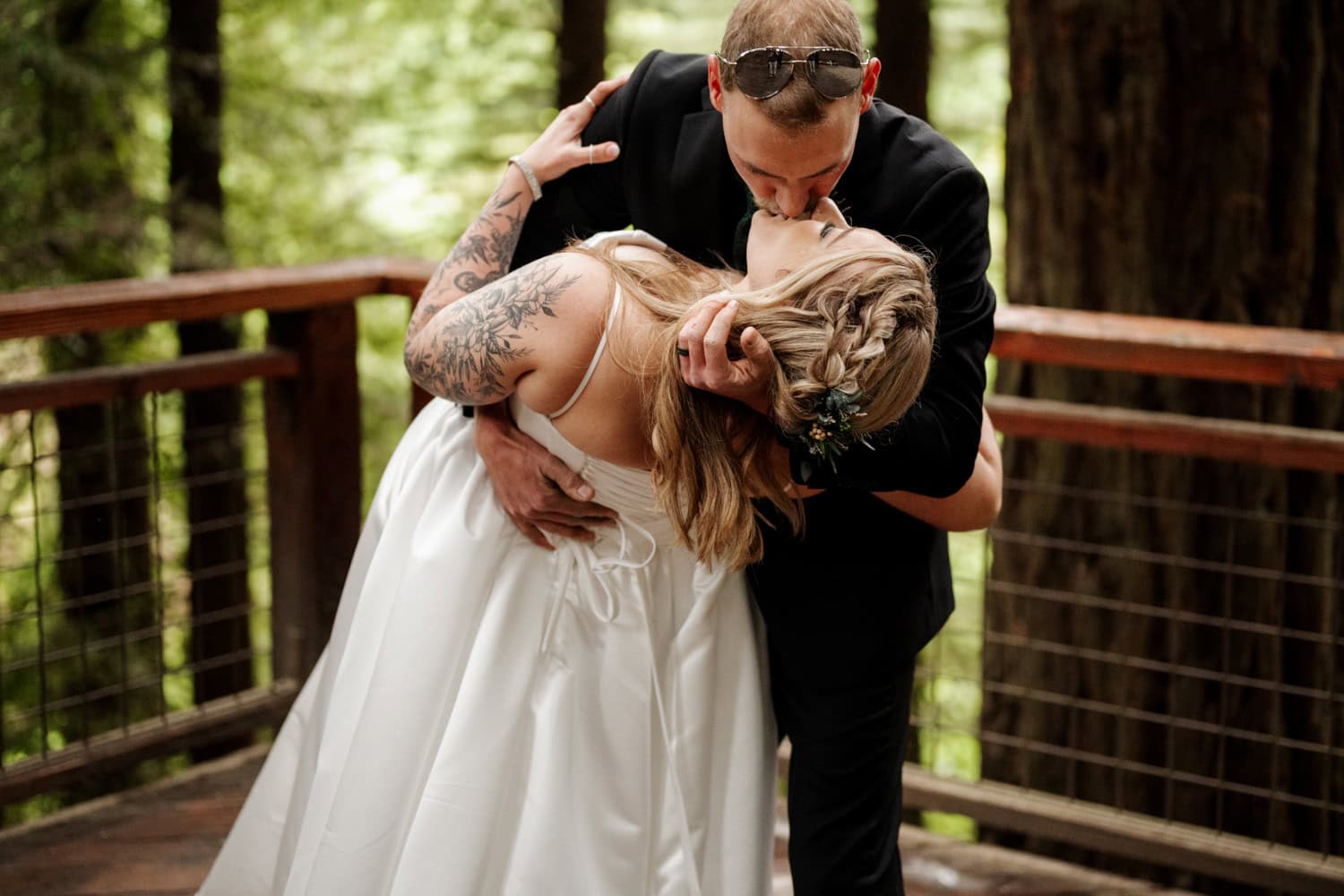
Practice Your First Kiss And Remember Not To Rush
You may have kissed your partner a thousand times, so practicing your elopement ceremony first kiss might seem silly or unnecessary. But truth be told, some couples feel pressure to have a photogenic or passionate kiss during their ceremony. Sometimes practicing your kiss ahead of time will help relieve some nervousness about this moment.
Do you want a long, passionate kiss? Do you want a more gentle kiss? A dip? A quick peck because you’ll be self-conscious in front of your guests? Keep in mind, a quick kiss will be more difficult to photograph.
Are you worried you’ll be so excited that you’ll miss your partner’s mouth and kiss their nose? Lol. Checking in with your partner to get on the same page about this moment will ensure you can anticipate what the other person will do and feel comfortable and confident in front of your guests and/or the camera.
What Traditions Or Activities Will You Incorporate Into The Ceremony?
During your elopement ceremony, you can incorporate more than just your vows to make it feel more meaningful and eventful. Any tradition you’d see at a big wedding can be modified and included to fit within an elopement ceremony. Below are a number of traditions I’ve personally witnessed, but you’re free to get creative.
- Exchange Rings
- Hand fasting
- Jumping The Broom
- A processional and/or recessional
- Sand Pouring
- Sing a Song
- Butterfly Release
- Garland Exchange
- Prayer
- Blanket Wrap
- Knot Tying
- Sign the Marriage License
- Wine Ritual
- Light a Candle
- Plant A Tree
- Create A Time Capsule
- Paint A Picture
- Cacao drinking
How Will You Order Your Ceremony Traditions and/or Activities?
After deciding what traditions and events you want in your elopement ceremony, you’ll want to determine how they will flow within it. Do you want to start with a guest performing a song, followed by words from your officiant, a couple of guest speeches, then your vows, your first kiss, and finish with signing your marriage license?
Or, if it’s just the two of you, would you like to start by painting a picture together, saying your vows, exchanging rings, listening to a pre-recorded song, then doing your first kiss, and finishing up with a time capsule?
Really, the world is your oyster, and your elopement ceremony plan can be as simple or complex as you want, with just minimal traditions or a variety of traditional activities. But having a planned flow that participants have been informed about will help ensure the experience is the best it can be.

Will You Have Ceremony Flowers Or Just A Bouquet?
If you’re eloping and keeping things simple, flowers aren’t necessary, but they can certainly add a nice visual element to enhance the vibe and your photographs.
Some couples opt for a simple bouquet and boutonniere. Other couples still want to go big with flowers decorating their elopement ceremony location. You’re already saving big by opting out of a guest list, so you may have the budget to invest in a beautiful floral arrangement.
Or you can let the natural environment speak for itself. There’s really no right or wrong choice here, so follow your gut on this one. If you’d like to explore floral options, check out this link for some recommendations.
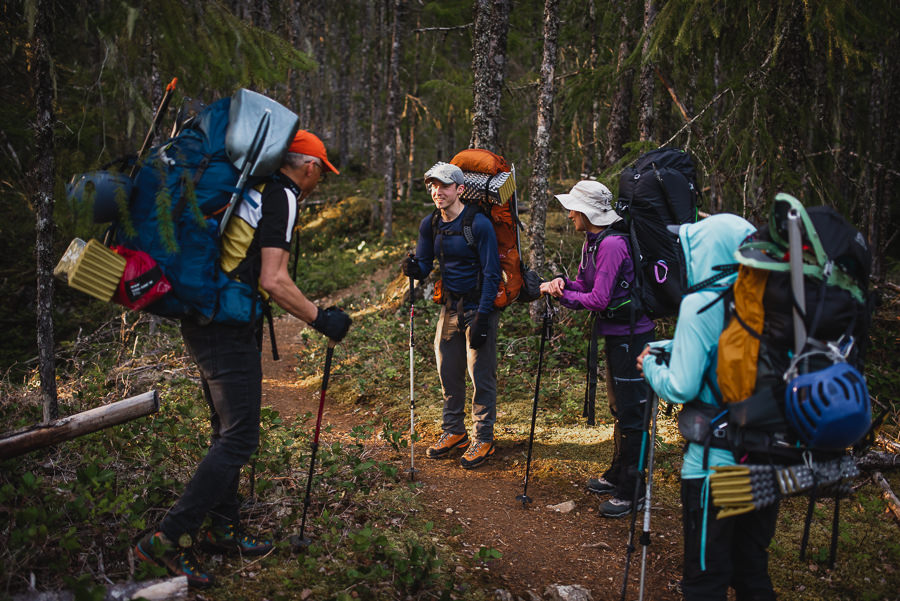
How Will You Transport Your Wardrobe And Ceremony Accessories To The Ceremony Location?
Depending on where you’re eloping, transporting your wardrobe and accessories may prove more or less challenging. For some elopements, showing up in your wardrobe with minimal accessories may make total sense.
However, if you’re hiking to the top of an overlook, what kind of bag will work best to transport your wardrobe without getting it too wrinkly? If you’re eloping on the beach, would a small wagon with big wheels be a good choice for transporting your picnic materials?
Will your photographer be taking photographs while you hike, and will the New Seasons tote bag you’re using communicate the aesthetic you’re hoping for in your photos? Or would a nicer daypack look better?
How will you attach your bouquet to your backpack so your hands aren’t full carrying it a long distance?
Things To Consider Bringing To Your Elopement Ceremony:
- A daypack to carry important items
- A suit or dress bag to avoid wrinkles
- Your marriage license
- Umbrellas if rain is forecast
- A rain jacket
- Hiking poles
- Water
- Snacks
- Picnic basket
- Picnic provisions
- Makeup for touch-ups
- Tissues
- Hand warmers if it’s cold
- Your written vows
- A blanket
- Bobby pins to secure hair if it’s windy
- A canteen with your favorite alcohol to loosen up a bit
- Pomade to fix hair
- Deodorant to freshen up after a hike
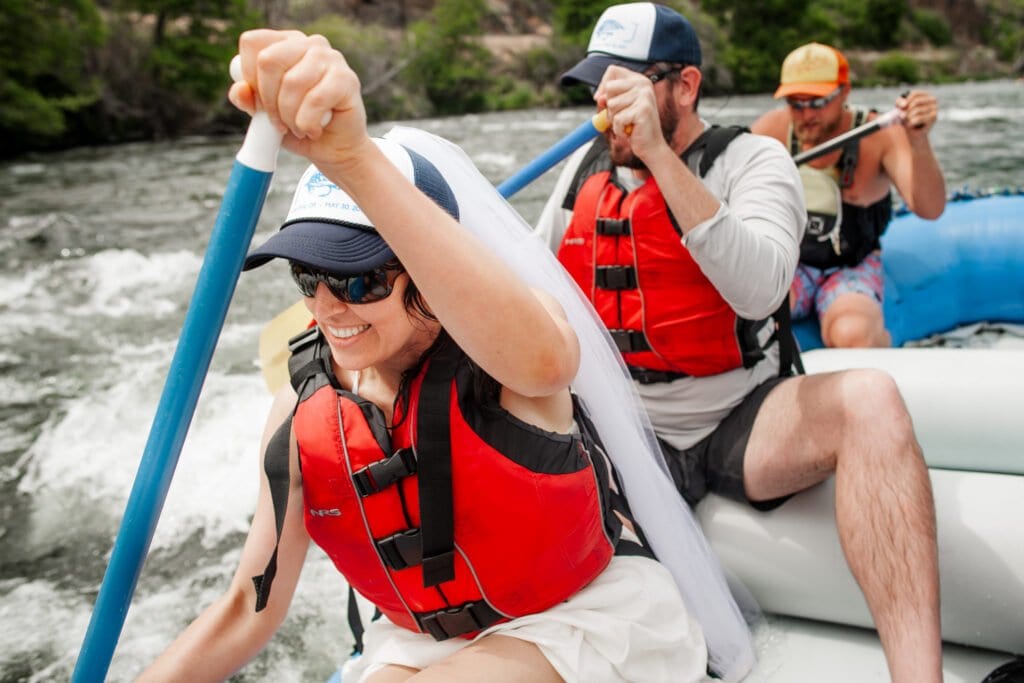
Activities Before Or After The Ceremony?
Alrighty! You’ve carefully considered the ins and outs of your elopement ceremony and have the perfect plan in place. However, an elopement doesn’t have to be limited to just your ceremony or vow exchange. You could potentially have a whole day’s worth of events and activities planned to make your elopement day extra special.
To explore some possibilities before or after your ceremony, check out this list of elopement activity ideas elopement activity ideas.